LACNIC Blog > FRIDA > FRIDA Funds Promote Community Networks in Colombia
FRIDA Funds Promote Community Networks in Colombia
June 27, 2019
Community networks have become a viable alternative to provide Internet access to unconnected populations in Latin America and the Caribbean. In Colombia, Colnodo is a project that seeks to connect people in remote or rural areas not served by the major companies to the digital world.
The funds obtained last year thanks to LACNIC’s FRIDA Program have allowed Colnodo to expand their efforts to support the creation of local networks for Internet connectivity in the rural communities of the municipalities of Buenos Aires and Maní Casanare in Colombia.
Lilian N. Chamorro Rojas, Project Leader at Colnodo, explained to LACNIC News that the beneficiary communities can now access new possibilities through connectivity and that their inhabitants are taking advantage of technology to implement a local connectivity model that can be sustained over time.
What was the origin of Colnodo’s Community Networks Project and what objectives does it pursue?
(Free access, no subscription required)
We have been working together with different organizations and entities looking for alternative ways to bring or improve connectivity in rural areas. As part of this process, we contacted communities and organizations that lacked connectivity. In 2017, we started a project in the municipality of Buenos Aires (Cauca) and by the end of the year we talked to people in the rural area of Maní (Casanare), a municipality located in the eastern plains of Colombia.
We advanced in the process of implementing community networks in this area. This was an opportunity for people to organize themselves as a community and access services that they would otherwise be unable to obtain.
We then applied to the FRIDA program with two purposes. The first was to support the community of Maní, more particularly the village of El Viso, in the design and implementation of its community network, with appropriate local services and Internet connectivity while taking advantage of the nearby fiber optic infrastructure and evaluating different models of network sustainability. The second was to review the regulatory and normative aspects that affect the community network ecosystem in Colombia, as well as to develop and promote proposals to achieve a more favorable regulatory environment for these networks in collaboration with the different stakeholders.
We have been working together with different organizations and entities looking for alternative ways to bring or improve connectivity in rural areas. As part of this process, we contacted communities and organizations that lacked connectivity. In 2017, we started a project in the municipality of Buenos Aires (Cauca) and by the end of the year we talked to people in the rural area of Maní (Casanare), a municipality located in the eastern plains of Colombia.
We advanced in the process of implementing community networks in this area. This was an opportunity for people to organize themselves as a community and access services that they would otherwise be unable to obtain.
We then applied to the FRIDA program with two purposes. The first was to support the community of Maní, more particularly the village of El Viso, in the design and implementation of its community network, with appropriate local services and Internet connectivity while taking advantage of the nearby fiber optic infrastructure and evaluating different models of network sustainability. The second was to review the regulatory and normative aspects that affect the community network ecosystem in Colombia, as well as to develop and promote proposals to achieve a more favorable regulatory environment for these networks in collaboration with the different stakeholders.
Have you managed to implement a pilot community network in the rural area of the municipality of Maní Casanare (Colombia)?
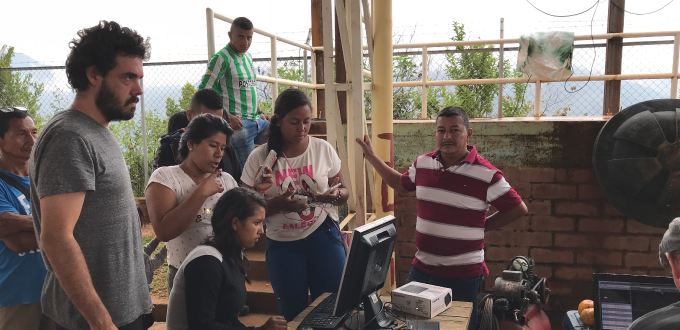
We implemented the first nodes of the community network in Maní and a broadband fiber optic link in the municipal capital and the backhaul to one of the central estates, from where the connection is distributed to neighboring properties. We also installed a node in the school, where we are planning to implement a classroom for local children and train the community on key aspects of Internet use as well as workshops for the maintenance and operation of the network, using five computers donated by the Siemens Foundation. The current nodes cover about 30 people including workers, villagers and students.
How did you work with the local community to make the project sustainable?
From the beginning, we have held meetings to discuss the needs of the community, the benefits of the network and the models proposed at the technical, organizational and financial levels. The community has been very active in defining the points that should be connected and reviewing the use and maintenance models, and has also committed to advancing the network’s implementation and sustainability.
We are still working on the sustainability model. Financially, we have a first version in which a group of people make a monthly contribution to cover the Internet connection, while others contribute on an hourly or daily basis. We have also identified people with different profiles who can contribute to the different aspects of the network: its organization, finances and technical requirements. For the latter we are designing and conducting workshops related to network deployment and maintenance.
Is the initiative sustainable? Can it be replicated in other areas of Colombia?
The experience is replicable. There are many areas of the country that do not have connectivity and there is affordable and accessible technology to address this challenge. There are also many communities that have great organizational capacity and are willing to assume commitments and establish agreements to move forward and implement their networks.
Community involvement is key to sustainability and replicability. If the community understands that it plays a vital role in the network –a network that belongs to them and offers multiple opportunities– it will be willing to assume commitments and will value the results even more.