For the past four years, LACNIC, LACNOG, and ICANN have been working together to deliver technical workshops in countries across Latin America and the Caribbean. This collaboration is designed to support the region’s network operators by creating in-person spaces for knowledge exchange, technical training, and the promotion of best practices that contribute to an open, stable, and secure Internet.
These workshops are part of a shared strategic goal: developing leadership within the regional community by strengthening its technical capacity. In a diverse region, with different realities and levels of maturity, training and exchange spaces among operators are key to consolidating stronger and better-prepared technical communities.
Training opportunities also help bring the technical community closer to the technical organizations within the regional and global Internet ecosystem. Through these spaces, participants gain a clearer understanding of each organization’s role, as well as the opportunities to collaborate in the processes they coordinate, which are based on multistakeholder participation.
(Free access, no subscription required)
Stronger Technical Communities
One of the most important contributions of NOG workshops is their ability to strengthen local technical communities. By bringing together network operators, Internet service providers, Internet exchange points, academic institutions, public-sector organizations, and other ecosystem stakeholders, these workshops help build relationships that extend well beyond a single training event.
These relationships matter because Internet operations also rely on trust and collaboration. When a technical community is active and connected, best practices circulate more effectively, lessons learned are shared, and coordination in response to incidents or common challenges becomes easier.
The workshops also provide a valuable opportunity to better understand operators’ real needs: which topics require further support, what barriers are preventing the adoption of best practices, and which technical capabilities should continue to be developed in each local context.
Stronger Technical Communities
One of the most important contributions of NOG workshops is their ability to strengthen local technical communities. By bringing together network operators, Internet service providers, Internet exchange points, academic institutions, public-sector organizations, and other ecosystem stakeholders, these workshops help build relationships that extend well beyond a single training event.
These relationships matter because Internet operations also rely on trust and collaboration. When a technical community is active and connected, best practices circulate more effectively, lessons learned are shared, and coordination in response to incidents or common challenges becomes easier.
The workshops also provide a valuable opportunity to better understand operators’ real needs: which topics require further support, what barriers are preventing the adoption of best practices, and which technical capabilities should continue to be developed in each local context.
NOGs have a particularly valuable characteristic: they are spaces designed by the technical community and aimed at those who operate networks on a day-to-day basis. This makes the discussions practical, direct, and closely connected to the real-world challenges of network operations.
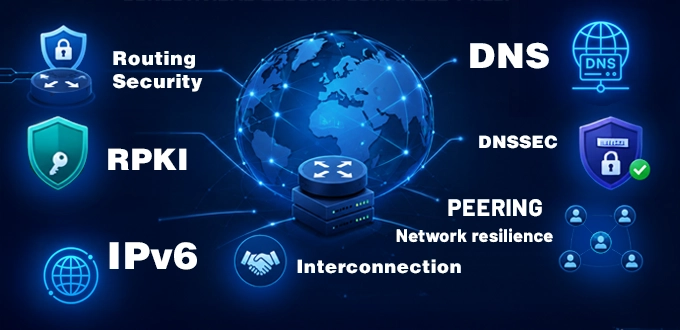
For LACNIC, LACNOG, and ICANN, these spaces are also a way to bring the regional and global technical agenda closer to local realities. Topics such as routing security, RPKI, DNS, DNSSEC, IPv6, interconnection, peering, and network resilience can be addressed from a practical perspective, linked to the challenges operators face in their own networks.
At the same time, the workshops create an opportunity to listen to the community, understand its priorities, and better tailor future training and support efforts. The purpose is not simply to deliver technical content, but to foster an exchange in which local experience also helps shape the regional agenda.
In addition, these workshops bring together operators from some of the main networks in each country, making it possible to work on shared technical challenges and discuss them with those who face these issues in their daily operations. Because they take place over several days, they provide the time needed to explain topics in greater depth, answer specific questions, and analyze real-world cases in more detail. This is complemented by hands-on labs, where participants can configure, test, and experiment with the concepts learned, helping ensure that best practices can later be translated into concrete actions within their own organizations.
Strengthening the Internet Through Collaboration
We believe that a more secure and resilient Internet is built from the ground up, in direct collaboration with those who operate it. Each training, exchange, and coordination opportunity helps consolidate local technical capabilities, strengthen relationships among key stakeholders, and reinforce regional leadership.
Promoting these spaces is a practical way to support the people who keep the Internet running every day, encourage the adoption of best practices, and help the region become better equipped to address the network’s current and future challenges.