The region’s guidelines for Internet governance
August 1, 2014
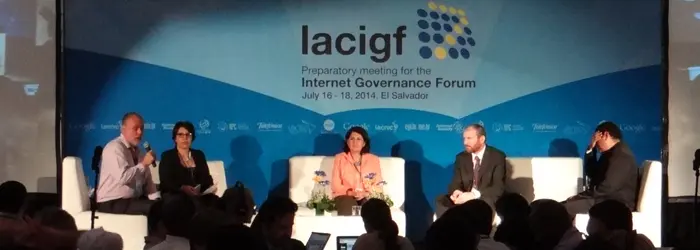
The impact of Internet governance issues on our everyday lives is greater than we think and has momentous implications for Internet development within our region, as evidenced by the presentations and comments made by 150 representatives from 21 different countries in Latin America and the Caribbean during the 10 working sessions of the seventh Regional Preparatory Meeting for the Internet Governance Forum (LACIGF) which met earlier this month in El Salvador.
At this meeting, representatives of civil society, governments, academia, the private sector, and the technical community analyzed and discussed issues ranging from the Internet ecosystem and the development of infrastructure to respect for human rights on the Internet.
One of the first issues to be brought up was the Internet governance ecosystem in 2014, where are we coming from and where are we going? NetMundial marked a before and after in the multistakeholder model discussions. The major challenge is to make these discussion mechanisms work and strengthening the multistakeholder model through the community’s effective involvement. “The Internet should be promoted, not regulated,” LACIGF participants agreed.
Internet access, its challenges and opportunities for development, were also debated at the El Salvador meeting. The importance of guaranteeing the use and appropriation of technology in every area where there is evidence of a digital divide was highlighted, as was the need to provide the knowledge needed to access technology intuitively (“just as easily as using an ATM or having a bowl of soup”). The goal, they said, should be to bridge the social divide by bridging the digital divide (“ICTs are a means for achieving our objectives, not an end in themselves”).
(Free access, no subscription required)
The El Salvador net neutrality panel was a major milestone in the region’s public discussions on Internet Governance or Telecommunications Regulation.
These discussions showed that there is agreement on the fact that net neutrality is now more important than ever.
For the first time, major players representing various sectors –operators, telcos, content providers, civil society– openly discussed and presented their views on a topic that has a decisive impact on the sustainability of Internet growth and development.