Internet number resources—ASNs, IPv4, and IPv6 addresses—are the invisible foundations that support connectivity, Internet resilience, and Internet governance itself. Although transparent to end users, they are crucial for the continuity of digital services, operational security, and the technical reputation of organizations.
Global Overview
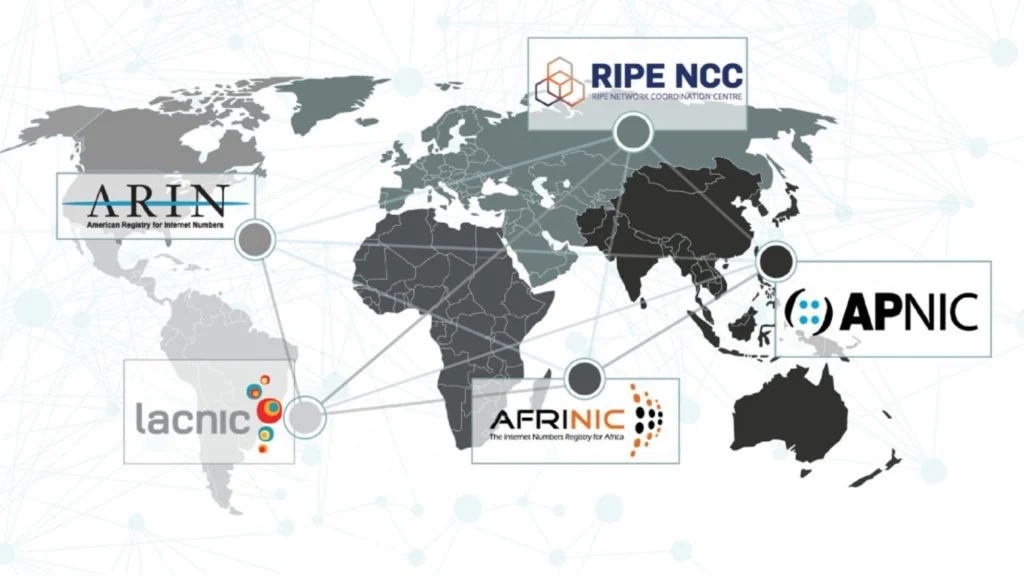
The management of these resources is coordinated in a decentralized manner by the five Regional Internet Registries (RIRs): ARIN in North America, RIPE NCC in Europe and the Middle East, APNIC in Asia-Pacific, AFRINIC in Africa, and LACNIC in Latin America and the Caribbean. This regional distribution follows the segmentation defined and recognized by the IANA.
Regional Internet Registries (RIRs). Source: NRO
IPv4 exhaustion across all regions has increased the strategic value of these address blocks and accelerated the need to operate natively in IPv6, while not losing sight of responsible IPv4 management. In this global context, specialized intermediaries known as ‘IP brokers’ have emerged (primarily focused on IPv4, now a scarce resource) to facilitate transactions such as the purchase, sale, and lease of address space. Although on a smaller scale than in the ARIN and RIPE regions, IP brokers also exist in the LACNIC region, but their operations are limited to formal transfers defined by community policies, with no room for unrestricted commercialization.
Why You Should Have Your Own ASN
Having your own ASN provides autonomy to define routing policies (BGP), establish direct interconnections (peering) at Internet Exchange Points (IXPs), and engage with multiple providers (multihoming). In today’s business landscape where digital resilience is critical, an ASN offers both technical independence and bargaining power.
LACNIC Policies: Community Regulations
(Free access, no subscription required)
In our region, LACNIC coordinates the allocation and administration of Internet number resources based on policies, which are rules written, debated, and approved through consensus by the regional community. These policies regulate resource allocation, use, transfer, and potential revocation.
These debates take place at the Public Policy Forum. The LACNIC Board fully respects the community’s autonomy in this process, and its role is limited to ratifying the consensus achieved through the Public Policy Forum.
In our region, LACNIC coordinates the allocation and administration of Internet number resources based on policies, which are rules written, debated, and approved through consensus by the regional community. These policies regulate resource allocation, use, transfer, and potential revocation.
These debates take place at the Public Policy Forum. The LACNIC Board fully respects the community’s autonomy in this process, and its role is limited to ratifying the consensus achieved through the Public Policy Forum.
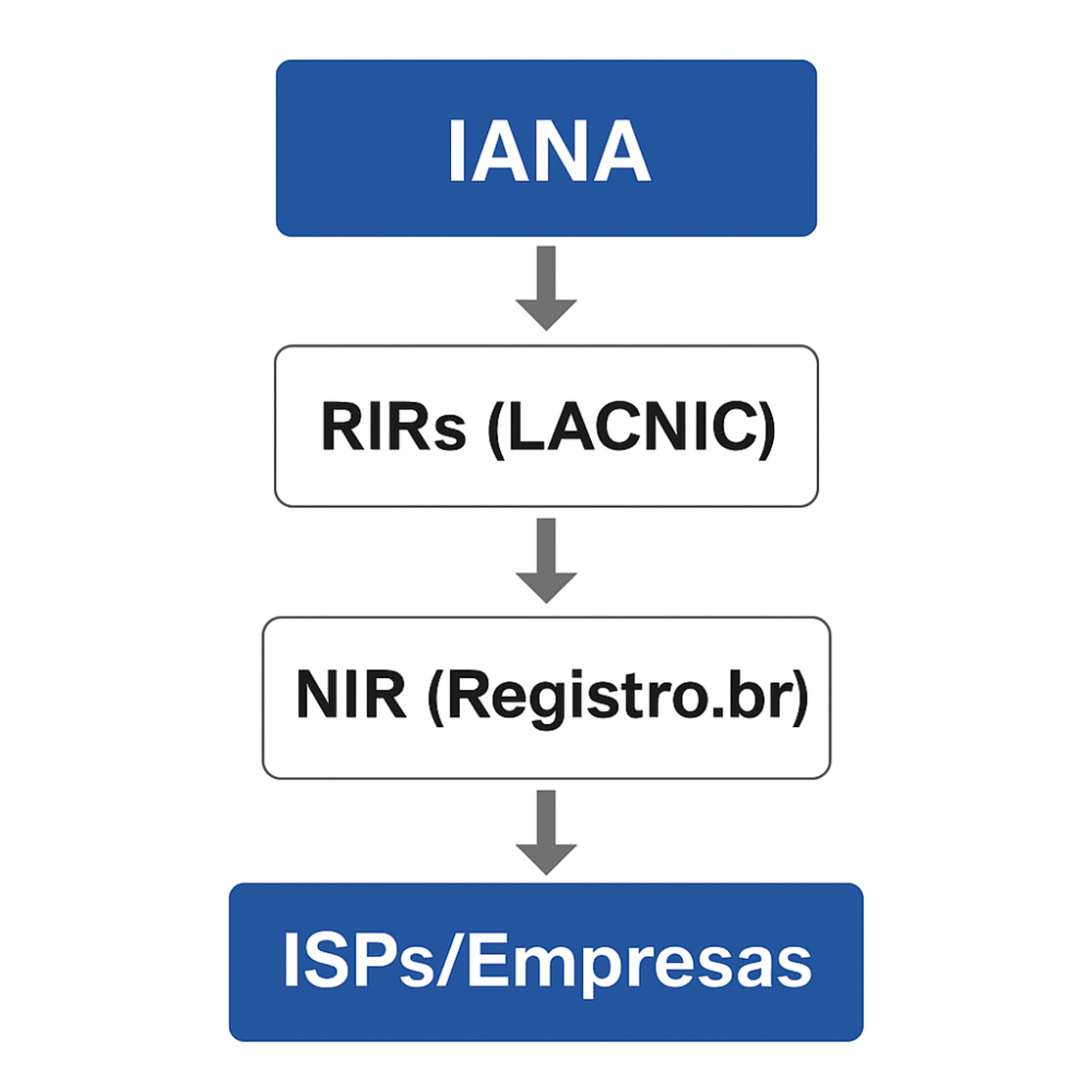
In Brazil, Registro.br serves as the National Internet Registry (NIR), a national registry accredited by LACNIC to manage ASN, IPv6, and IPv4 requests and transfer applications in the country. Resource management adheres to regional policies; however, the practical interface with Brazilian organizations takes place through the NIR.
IANA – RIRs – NIRs – ISPs
It is important to highlight that maintaining these resources requires the payment of an annual fee, which is determined based on allocation categories and the number of resources in use. This reinforces the regulated nature of allocations based on utilization.
Mergers and Acquisitions Among Regional Providers
When a consolidation or restructuring occurs within the ISP sector, the transfer of number resources is often a critical step. If this process fails, it can create risks such as loss of routability, MOAS (when the same block is simultaneously advertised by more than one ASN), inconsistencies in WHOIS records, routing reputation issues, and even legal disputes.
These risks can lead to the permanent loss of IPv4 blocks, a resource already in short supply. This is why any transfer process should always be carefully planned and include a comprehensive inventory, a dedicated technical and administrative manager, and a schedule that is aligned with the routing migration window.
Current Situation in the LACNIC Region
Organizations can request ASNs and IPv6 addresses as usual. To be included in the IPv4 waiting list, an organization must also request an ASN and an IPv6 block. If approved, the organization is placed on a queue that can currently last up to 10 years, underscoring the importance of planning for native IPv6 operations.
The LACNIC policies currently in force allow resource transfers but do not recognize IPv4 address leasing as a valid justification for use. Nonetheless, some Brazilian ISPs resort to leasing blocks from other RIRs, a practice that requires increased attention to contracts, traceability, routing impacts, and geolocation issues.
It is worth noting that while this multistakeholder system is robust and effective, it is sometimes the target of new government regulation proposals. The message is clear: new legislation is unnecessary when established, internationally accepted, and community-driven processes are already in place.
Final Thoughts
In the Brazilian market increasingly marked by mergers, acquisitions, and integrations, adhering to proper procedures is not only a regulatory obligation, but also a strategic decision that reinforces operational sustainability and reputation. Treating ASN, IPv4, and IPv6 resources as regulated allocations for use—rather than as property—ensures technical legitimacy, operational continuity, and institutional credibility.
Note: This article reflects the LACNIC policies in force in October 2025. Future updates may modify the information discussed above.