This article was originally published in DPL News.
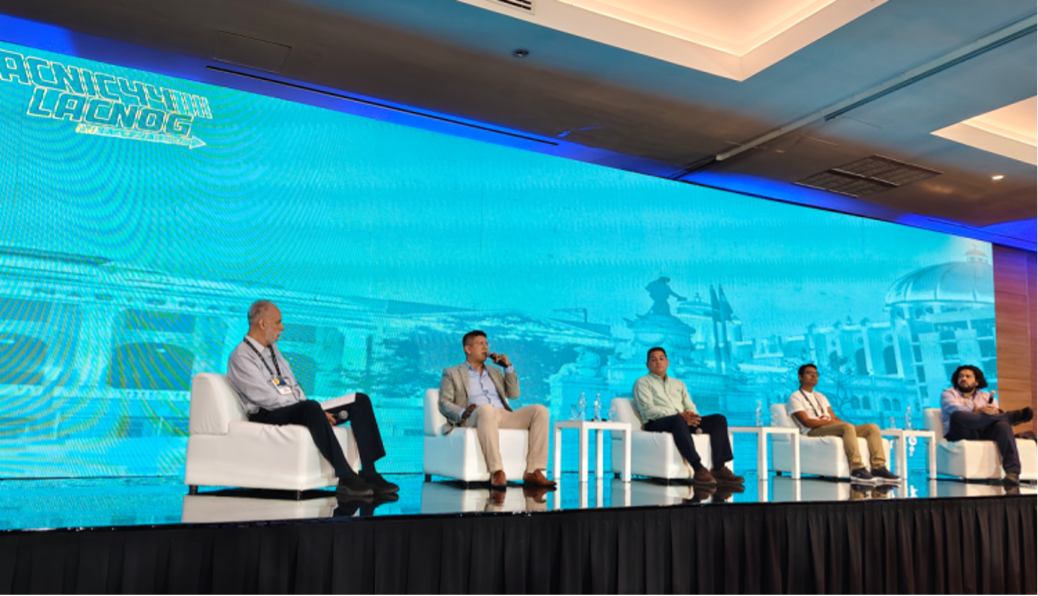
San Salvador. Thirty years after the first direct connection to the Internet was established in El Salvador by Rafael Lito Ibarra, connecting everyone in a country remains a challenge in Latin America. The obstacles highlighted by the man known as the Father of the Internet in El Salvador include the region’s topology and the availability of electricity.
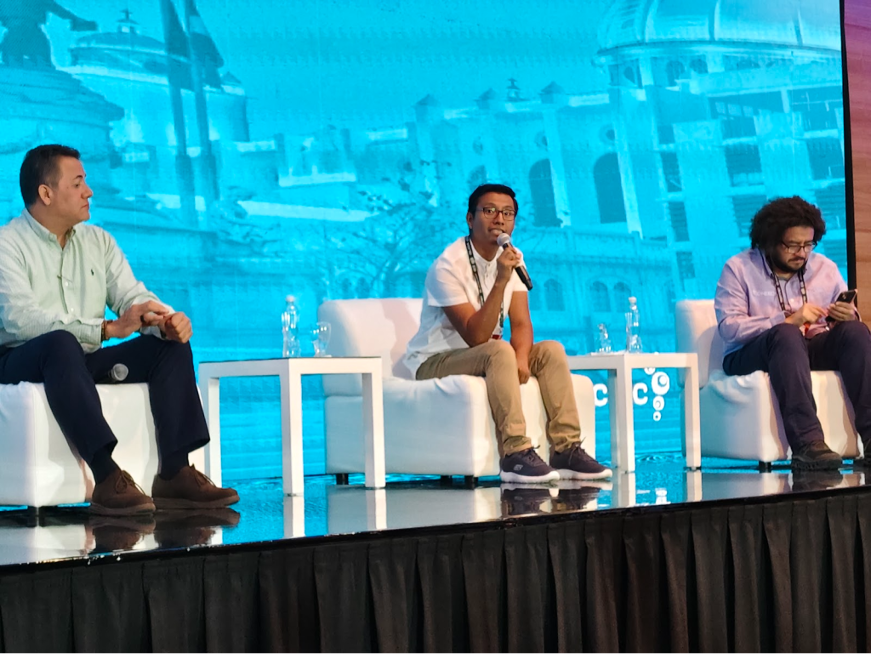
During the LACNIC 44 event, other specialists with extensive experience in fieldwork and community network deployment in the region mentioned other critical factors such as a sense of ownership, sensitivity, and sustainability, both financial and social.
(Free access, no subscription required)
Connectivity is Creativity
“Connectivity is not just about technology; it also relies on human imagination,” explained Rodrigo Najarro, Director of Information and Communication Technologies at the Salvadoran Ministry of Health.
To bring connectivity to the last mile, Najarro explained the importance of leveraging existing infrastructure and entering into alliances with private companies, as reaching a new community not only means expanding the market, but also connecting the country.
Najarro summarized his participation in the panel “Challenges of Last-Mile Connectivity for Communities with Limited Access” in three key points: critical infrastructure as the foundation on which any type of service can be deployed; leveraging creativity and existing resources; and always working with public-private partnerships and cooperation.
Connectivity is Creativity
“Connectivity is not just about technology; it also relies on human imagination,” explained Rodrigo Najarro, Director of Information and Communication Technologies at the Salvadoran Ministry of Health.
To bring connectivity to the last mile, Najarro explained the importance of leveraging existing infrastructure and entering into alliances with private companies, as reaching a new community not only means expanding the market, but also connecting the country.
Najarro summarized his participation in the panel “Challenges of Last-Mile Connectivity for Communities with Limited Access” in three key points: critical infrastructure as the foundation on which any type of service can be deployed; leveraging creativity and existing resources; and always working with public-private partnerships and cooperation.
Awareness, a Prerequisite for Connection
Gilberto Lara, General Director of non-profit organization Conexión, observed that raising awareness among the population is essential to prevent potential roadblocks this type of initiatives may face.
After sharing the case of a community member who resisted these efforts arguing that they were “the work of the Devil,” he pointed out the need to provide training in a way that addresses cultural issues, especially in rural areas, where people may not have had access to education.
Specifically, he listed three key aspects: a sense of community ownership and the use and application of technology in their main economic activity; identification and training of community leaders, who can then become network managers and digital promoters; and associating connectivity with meaningful use cases.
“This can only be done by involving members of the community,” Lara stressed. To achieve this, it’s important to consider the installed capacity that can remain in the community. Therefore, he concluded, Conexión promotes not only economic but also social sustainability.
Community Sensitivity and Social Project
Marco Antonio Luna Jiménez, a member of Telecomunicaciones Indígenas Comunitarias AC (TIC), recalled that the association was created by several communities that came together and fought to obtain a concession.
Luna emphasized that a thorough analysis must be conducted in the very beginning to identify a social project that can be developed within the community.In addition to the lack of infrastructure and funding, he listed youth migration as one of the main barriers to deploying connectivity in indigenous regions of Mexico. As a result, training is required for older adults who remain in the villages and need to communicate with those who have left.
The speaker also mentioned bureaucratic challenges, noting that while the association is already present in some regions, it is seeking to expand into other states. He urged that, despite the arrival of telecommunications and technology, there should be a sensitivity to ensure that the customs of how the local population communicates are not lost and that the project remains sustainable.
Finally, Pablo Ruidiaz, Executive Director of InteRed Panama, shared that between 46 and 50% of rural areas in the country still lack connectivity, adding that national projects have provided coverage to many of these communities.
As the main resources for driving the expansion of connectivity, he listed community organizations, especially those that are legally established; community networks; and the search for anchor clients capable of sustaining and funding the project.
To conclude, he urged people to engage the communities and share with the population why access is important for them. In other words, to achieve community sustainability and to combine efforts through alliances to advance the ultimate goal of connecting 100% of the population.
The views expressed by the authors of this blog are their own and do not necessarily reflect the views of LACNIC.