FRIDA at the IGF: The South Also Exists
December 22, 2016
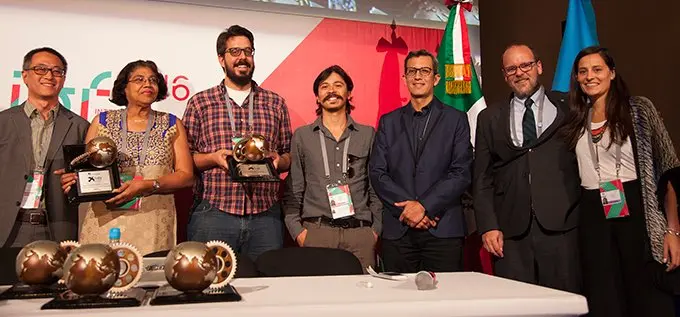
The FRIDA program and its Seed Alliance partners, ISIF Asia by APNIC and FIRE Africa by AFRINIC, participated in the Internet Governance Forum (IGF), which brought more than 3,000 participants from across the world to Guadalajara (Mexico) on 6-9 December.
During this global Internet governance summit, FRIDA organized two workshops on cybersecurity and entrepreneurship, one of which received comments from Vint Cerf, who was in the audience.
Cybersecurity in and by the Global South. On Tuesday, FRIDA and its Seed Alliance partners organized their first workshop, Cybersecurity in and by the Global South. With a packed auditorium, the session was moderated by Carlos Martinez, LACNIC’s CTO, while panelists included Olaf Kolkman, Chief Internet Technology Officer at ISOC; Cristine Hoepers, General Manager of CERT.br; and Jean Robert Hountomey, Coordinator of AfricaCERT.
To open the debate (https://www.youtube.com/watch?v=_GnqRogVqG4&t=1s), Olaf emphasized the importance of collaborative security as an approach to cybersecurity issues. Collaborative security stems from the very nature of the Internet: the Internet is a network of networks, it is decentralized, and many people contribute to its operation. In this sense, the Internet Society expert noted that “security can also be achieved in collaboration” and that all actions for addressing cybersecurity require the contribution of the various stakeholders involved.
(Free access, no subscription required)
Hoepers shared Brazil’s experiences in connection with cybersecurity. She noted that the most important challenges affecting the implementation of best practices is building knowledge and capacity. “When someone doesn’t know what to do, the problem is shared and becomes collaborative,” said Hoepers. She highlighted the collaboration with LACNIC at regional level and added that “one of the challenges is helping people realize that cybersecurity is a collaborative effort, that everyone is responsible for cybersecurity.”
Meanwhile, Jean Robert shared AfricaCERT’s experience and how they managed to overcome collaboration and trust issues. “Initially, different stakeholders spoke different languages, so we had to reframe the debate in terms of economic benefits, incentives and losses,” said Robert, who added they had found a common ground that facilitated the dialogue and collaboration needed for the technical community and political leaders to work together to improve security in the African continent.
During the workshop, the project leaders of this year’s two FRIDA grant recipients presented their cybersecurity initiatives: Marcelo Palma of Universidade Estadual de Campinas (Brazil) and Erika Vega of RENATA (Colombia). Palma spoke of the initiative to protect TOR against malicious traffic in Brazil, while Vega described the BGP Security project by RENATA (Colombia’s National Advanced Technology Academic Network).