New computer security experts for Central America
March 30, 2015
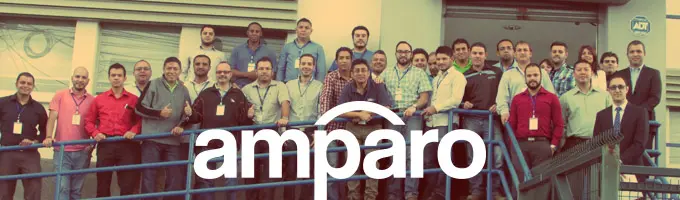
Twenty-eight representatives of public and private Costa Rican, Colombian and Nicaraguan companies and organizations participated in the Computer Security Training Workshop organized by LACNIC´s AMPARO project in San Jose, Costa Rica, on 9-13 March.
Participants received information and training on how to handle sensitive information online and manage computer Internet security incidents. This initiative seeks to strengthen regional computer security capabilities and is part of LACNIC´s AMPARO project, the purpose of which is to prepare regional experts to address the growing security challenges posed by the significant increase in the number of social and economic transactions conducted online. By training experts throughout the region, AMPARO is promoting the creation of Computer Security Incident Response Teams (CSIRTs) in our continent.
Cesar Diaz, LACNIC’s External Relations Officer for Central America, told LACNIC News that the AMPARO workshops are designed to provide training opportunities on various computer security issues, including how to handle sensitive information, different types of response centers, CSIRT functions, operational and risk management policies, how to handle phishing incidents, botnet attacks, and secure DNS.
Diaz told LACNIC News that the Costa Rica workshop had provided participants with the opportunity to share their concerns regarding technical issues such as distributed denial of service (DDoS) attacks and spam, among others. For example, Diaz recalled that workshop participant Gabriel Cambronero of RACKLODGE had mentioned different computer security incidents he had had to face and what had led him to implement immediate responses. Diaz added that Cambronero had mentioned his organization had had to preventively identify their customers in order to know what activities they were involved in and thus be able to respond immediately in case of a potential incident.
(Free access, no subscription required)
Is there general agreement on the damage caused by computer security incidents in the region?
Diaz: For Leonardo Camano of COMPULEAR, awareness of the damage caused by computer security incidents in Costa Rica does exist. However, many of these incidents involve more than just one country, which is why we need to identify them in a timely manner so that users are not affected.
Based on reported incidents, what types of entities have been affected the most?