This analysis examines recent trends related to ASN-Only organizations and their impact on RIRs, particularly LACNIC.
What is an ASN-Only Organization?
The term “ASN-Only organization” refers to an organization or institution that has been allocated an Autonomous System Number (ASN) but does not hold any IPv4 or IPv6 prefixes.
Reason for the Study
We aim to understand the impact of ASN-Only requests by answering the following questions:
(Free access, no subscription required)
Do these organizations announce IPv4 prefixes?
Do these organizations announce IPv6 prefixes?
What is the size of the announced prefixes?
How many prefixes are announced?
What is their RPKI status?
Which RIR allocated each announced prefix?
Which ASNs are not visible in the DFZ?
General Information
There are currently 522 ASN-Only organizations in the LACNIC region. Of these, 215 ASNs announce IPv4 and/or IPv6 prefixes on the Internet. Specifically, these ASNs announce 1,069 IPv4 prefixes and 64 IPv6 prefixes. In total, 216 ASNs are visible in the DFZ.
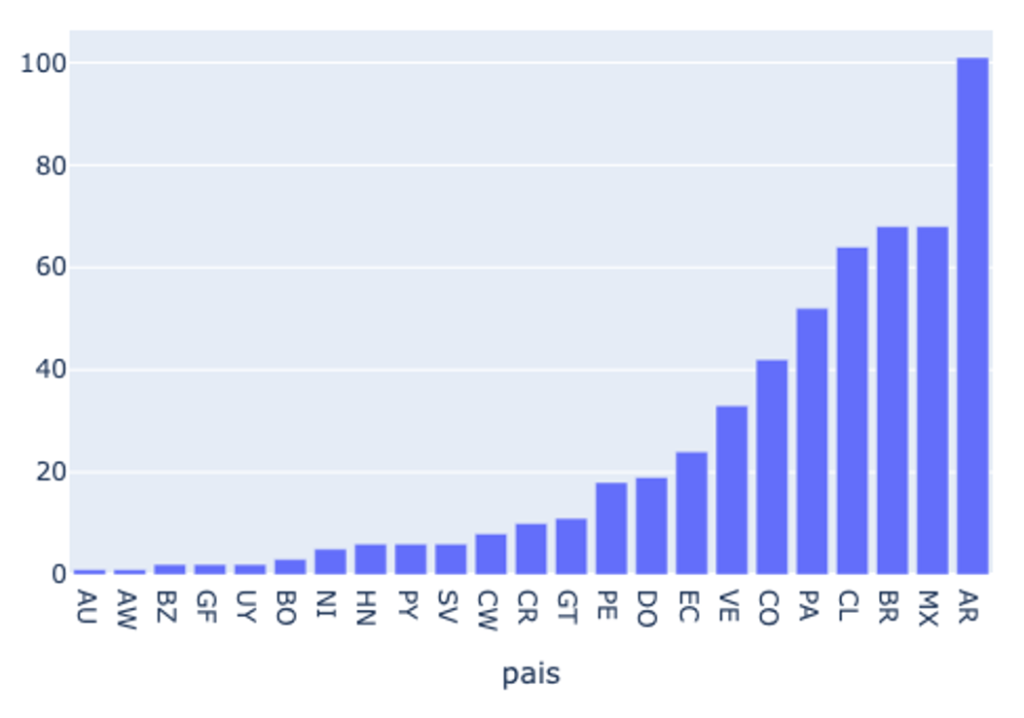
ASN-Only organizations are distributed across countries in the LACNIC region as follows:
Size of Advertised Prefixes
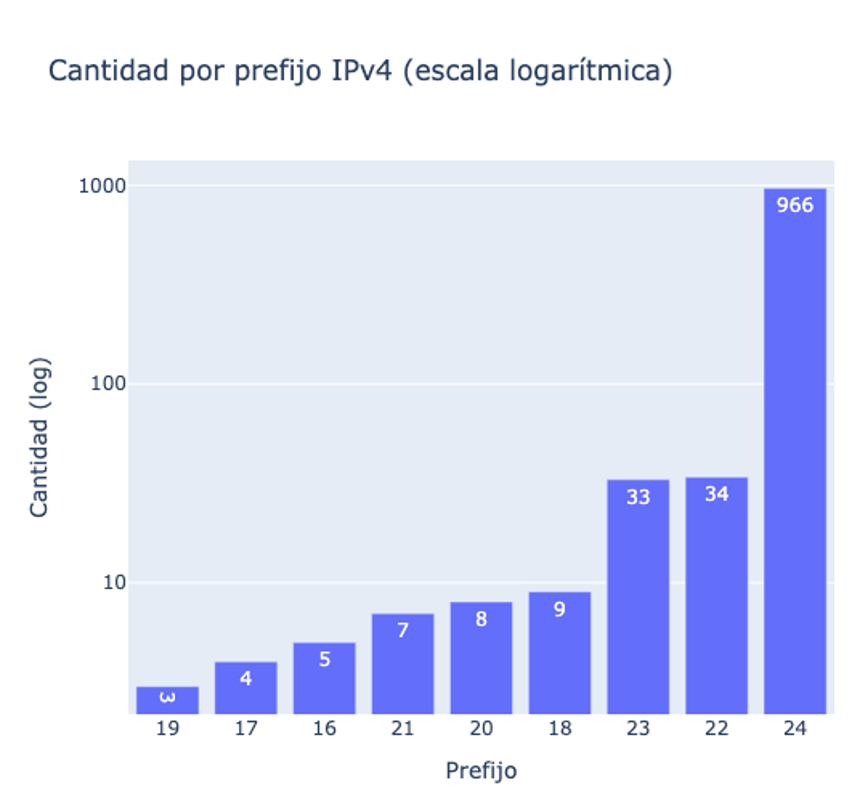
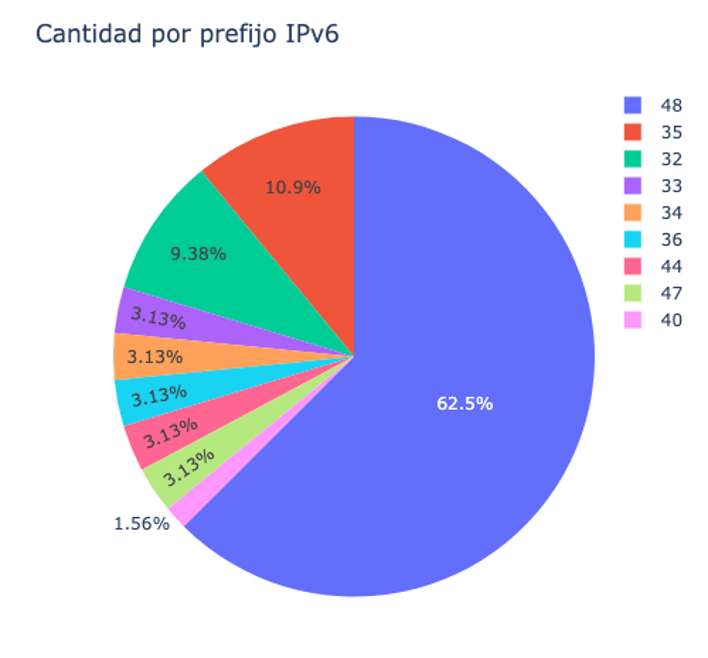
The images below show the size distribution of announced IPv4 prefixes (left) and IPv6 prefixes (right). As expected, the most frequently announced prefix lengths are /24 for IPv4 and /48 for IPv6.
Do these organizations announce IPv4 prefixes?
Do these organizations announce IPv6 prefixes?
What is the size of the announced prefixes?
How many prefixes are announced?
What is their RPKI status?
Which RIR allocated each announced prefix?
Which ASNs are not visible in the DFZ?
General Information
There are currently 522 ASN-Only organizations in the LACNIC region. Of these, 215 ASNs announce IPv4 and/or IPv6 prefixes on the Internet. Specifically, these ASNs announce 1,069 IPv4 prefixes and 64 IPv6 prefixes. In total, 216 ASNs are visible in the DFZ.
ASN-Only organizations are distributed across countries in the LACNIC region as follows:
Size of Advertised Prefixes
The images below show the size distribution of announced IPv4 prefixes (left) and IPv6 prefixes (right). As expected, the most frequently announced prefix lengths are /24 for IPv4 and /48 for IPv6.
Origin of Advertised Prefixes
It is also interesting to note the origin of the prefixes announced by these ASNs. As the data show, most originate in the LACNIC region. However, prefixes allocated by ARIN and RIPE NCC—and, to a lesser extent, by APNIC and AFRINIC—are also announced.
RIR
IPv4 Resources
IPv6 Resources
Total
Percentage
AFRINIC
5
0
5
0.44%
APNIC
1
0
1
0.09%
ARIN
154
4
158
13.94%
LACNIC
846
59
905
79.88%
RIPE NCC
63
1
64
5.65%
Global
1069
64
1133
100%
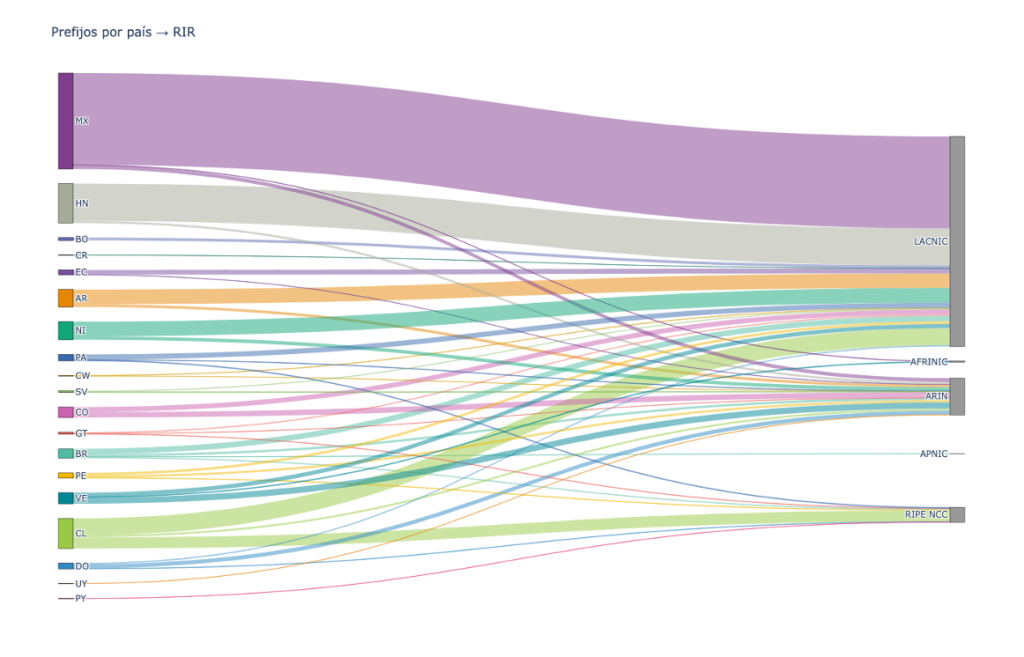
Which RIRs allocated the prefixes announced in each country?
Examining the data at the country level shows which RIRs allocated the prefixes announced by ASN-Only organizations in each country.
As the image shows, Brazil is the only country that announces APNIC prefixes, while Mexico and Venezuela are the only countries that announce AFRINIC prefixes. Uruguay announces only one ARIN prefix, while Paraguay announces only one RIPE NCC prefix. In total, 16 countries in the region announce ARIN prefixes, while seven announce RIPE NCC prefixes.
RPKI Adoption
Of the 215 ASNs that announce prefixes, 138 have at least one valid ROA. The remaining ASNs have invalid or unknown ROA status.
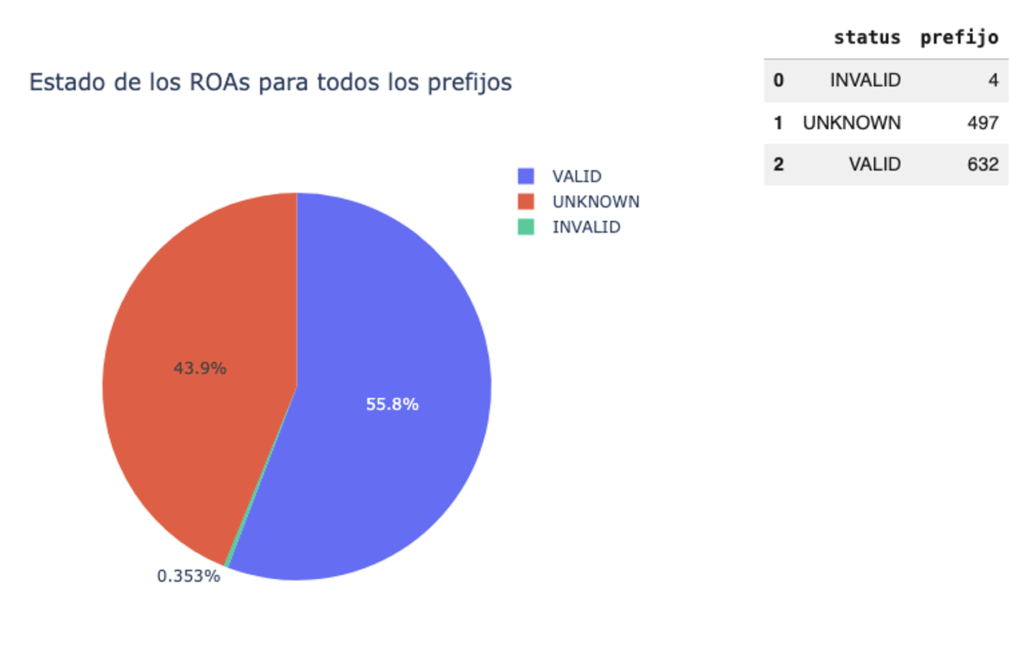
The chart below shows the number of IPv4 and IPv6 prefixes by ROA status.
DFZ
A total of 216 ASNs are visible in the DFZ: 189 announce only IPv4 prefixes, six announce only IPv6 prefixes, and 21 announce both IPv4 and IPv6 prefixes.
Of the 1,067 IPv4 prefixes visible in the DFZ, 592 have VALID RPKI status, 470 have UNKNOWN status, and four have INVALID status. Of the 64 IPv6 prefixes announced in the DFZ, 38 have VALID ROAs and 26 have UNKNOWN status.
Conclusions
This study analyzes 522 ASN-Only organizations in the LACNIC region. Of these, only 216 announce prefixes on the network (primarily IPv4 /24s) while 306 remain invisible in the DFZ. The findings show that 79.88% of the announced resources are from LACNIC, with substantial use of ARIN resources, and that 120 ASNs validate their prefixes using RPKI.
To summarize:
Most announced address space was allocated by LACNIC, ARIN, or RIPE NCC. A small number of prefixes allocated by APNIC and AFRINIC are also observed.
IPv4 prefixes are highly fragmented into small networks. Of all announcements, 90.3% are /24s (966 prefixes), the standard minimum prefix length generally accepted in the global BGP routing table.
IPv6 deployment is dominated by /48 prefixes (62.5%).
The views expressed by the authors of this blog are their own and do not necessarily reflect the views of LACNIC.