New Internet Governance Spaces
December 20, 2017
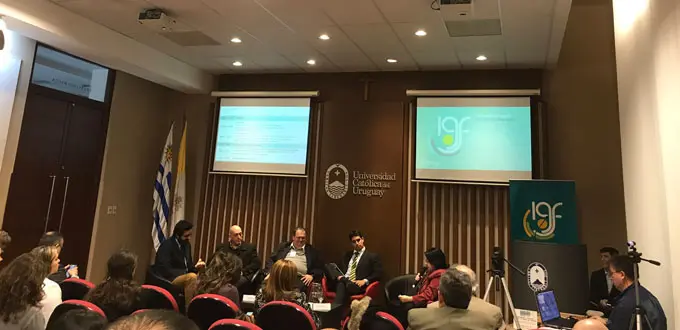
Through its Leaders project, this year LACNIC has promoted the discussion of the most relevant Internet governance issues at national forums held in Costa Rica, Guatemala, Peru, Bolivia, Argentina, Panama, and Uruguay, as well as at LACIGF – a regional space devoted to the strengthening of the Internet.
As the Internet becomes increasingly relevant in the social and economic life of every citizen, the construction of a collaborative Internet model is also gaining greater importance, particularly through a multiplicity of voices in decision-making processes regarding how resources are managed.
LACNIC created Leaders to strengthen governance forums throughout the region and thus encourage and facilitate the participation of its experts in these platforms and promote the multistakeholder model, under which all interested sectors can contribute so that the Internet will take into account their interests.
This year, Leaders specifically provided support to new spaces aimed at establishing good practices in Internet governance debates, said Kevon Swift, Head of Strategic Relations and Integration at LACNIC.
(Free access, no subscription required)
“A new generation of spaces and countries are generating Internet governance dialogue. This is our goal with this initiative: allowing a greater number of organizations to join the discussion,” added César Díaz, Head of Strategic Relations and Telecommunications at LACNIC.
For example, Costa Rica, Bolivia, and Guatemala held Internet Governance Dialogues for the first time, thus strengthening local contributions and adding topics with multiple points of interaction.
According to Swift, organizing these forums in different countries strengthens the basis of the regional and global discussion as, in his opinion, some of the richest debates occur at national level with the participation of “a large number of stakeholders.” He also added that the important thing is that “governments do not have control over the parties involved in the discussions, so local communities can better reflect on their specific needs and potential solutions.”