By Nahema Falleiros, postdoctoral researcher at the Oscar Sala Chair of the Institute for Advanced Studies at the University of São Paulo (IEA-USP)
Regional Internet Registries
In this post for the LACNIC blog, I provide a summary of the main results of an international research project on legitimacy in the RIRs conducted at the University of Gothenburg and funded by the Swedish Research Council. The full results are available in this video and this presentation. This comparative study was conducted between 2022 and 2024 and set out to answer the following question:
To what extent and for what reasons are AFRINIC, APNIC, and LACNIC as regional and non-state actors gaining legitimacy in global Internet governance? To answer this question, we measured the perceived legitimacy of these three RIRs from the Global South.
What is legitimacy and why does it matter?
In abstract terms—that is, in theory—legitimacy refers broadly to the perception or belief that a ruler or institution has the right to exercise power in a consensual manner. In concrete terms—i.e., in practice—it reflects the belief that these institutions have the (formal) authority to develop and manage certain rules for the internet. In this case, legitimacy refers to the underlying trust and approval of a governance arrangement. Therefore, it extends beyond a mere gesture of fleeting consent regarding certain policies or leaders. Here, legitimacy entails a deeper belief in, and an underlying approval of, the governing apparatus or authority itself.
(Free access, no subscription required)
In the case of LACNIC and the other RIRs, legitimacy can help their presidents assume mandates, obtain resources, engage their community, make decisions, achieve goals, solve problems, and resist potential competing institutions, thus ensuring a more stable and influential position in global Internet governance.
Empirical Study
Between 2022 and 2024, 392 interviews were conducted using a mixed-methods approach (combining open-ended and closed-ended questions). We interviewed former board or executive council members, staff, representatives of member organizations, and members of the broader technical community. Key questions addressed the perceived importance of legitimacy, in other words, how much respondents personally care about the RIRs and their level of trust in these organizations.
Importance, Commitment, and Trust in the RIRs of the Global South
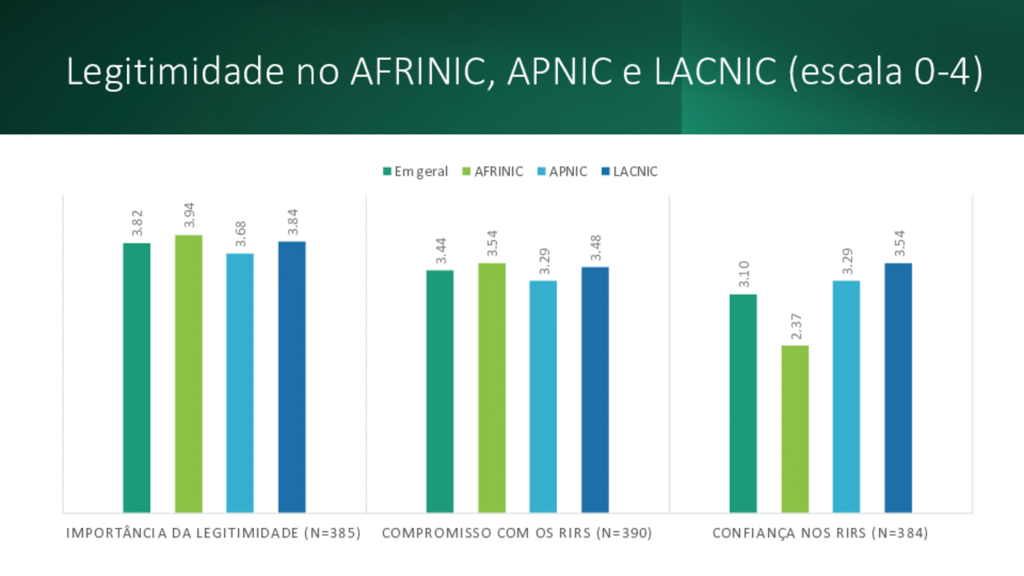
The vast majority of respondents consider legitimacy to be extremely important for the three RIRs analyzed. This view is widely shared across all interest groups and social categories. Participants associated with AFRINIC ranked legitimacy as the most important factor, followed by respondents from LACNIC and then APNIC.
In the case of LACNIC and the other RIRs, legitimacy can help their presidents assume mandates, obtain resources, engage their community, make decisions, achieve goals, solve problems, and resist potential competing institutions, thus ensuring a more stable and influential position in global Internet governance.
Empirical Study
Between 2022 and 2024, 392 interviews were conducted using a mixed-methods approach (combining open-ended and closed-ended questions). We interviewed former board or executive council members, staff, representatives of member organizations, and members of the broader technical community. Key questions addressed the perceived importance of legitimacy, in other words, how much respondents personally care about the RIRs and their level of trust in these organizations.
Importance, Commitment, and Trust in the RIRs of the Global South
The vast majority of respondents consider legitimacy to be extremely important for the three RIRs analyzed. This view is widely shared across all interest groups and social categories. Participants associated with AFRINIC ranked legitimacy as the most important factor, followed by respondents from LACNIC and then APNIC.
Most respondents stated that the RIR of which they are members is “very” important. However, the AFRINIC and LACNIC communities expressed slightly higher levels of commitment to their RIRs compared to respondents in the APNIC community.
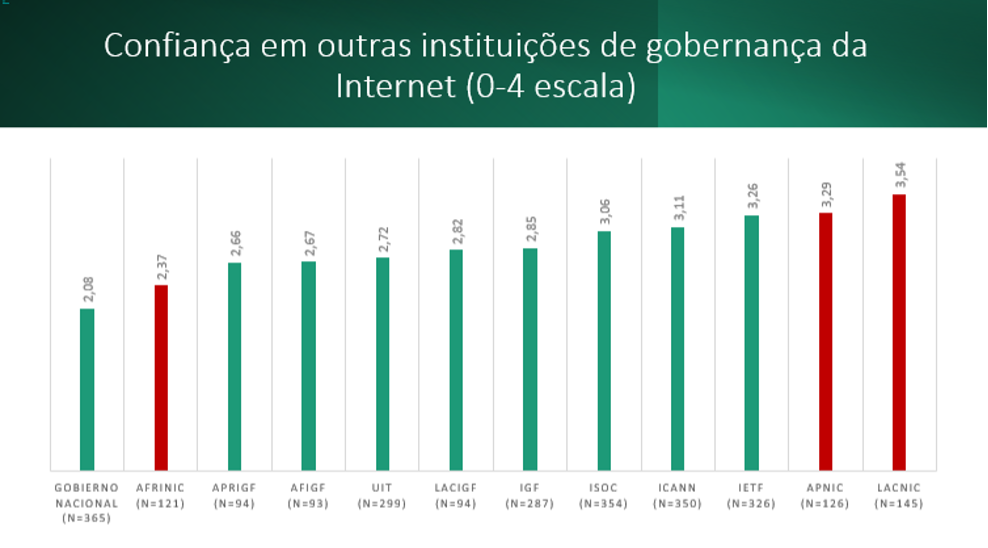
Regarding trust, the results revealed significant variation among the three RIRs. On average, participants expressed the highest level of trust in LACNIC, followed by APNIC, and lastly AFRINIC. Opinions regarding AFRINIC were quite varied: while some individuals reported low levels of trust, trust levels reported by others were high. We observed that individuals outside the RIR community showed a considerable degree of trust. In a previous study conducted by Hortense Jongen (coordinator of this study) and Jan Scholte (her advisor), participants affiliated with ICANN, on average, also expressed a high level of trust in the RIRs.
Trust in the Board, Staff, and Community of RIRs in the Global South
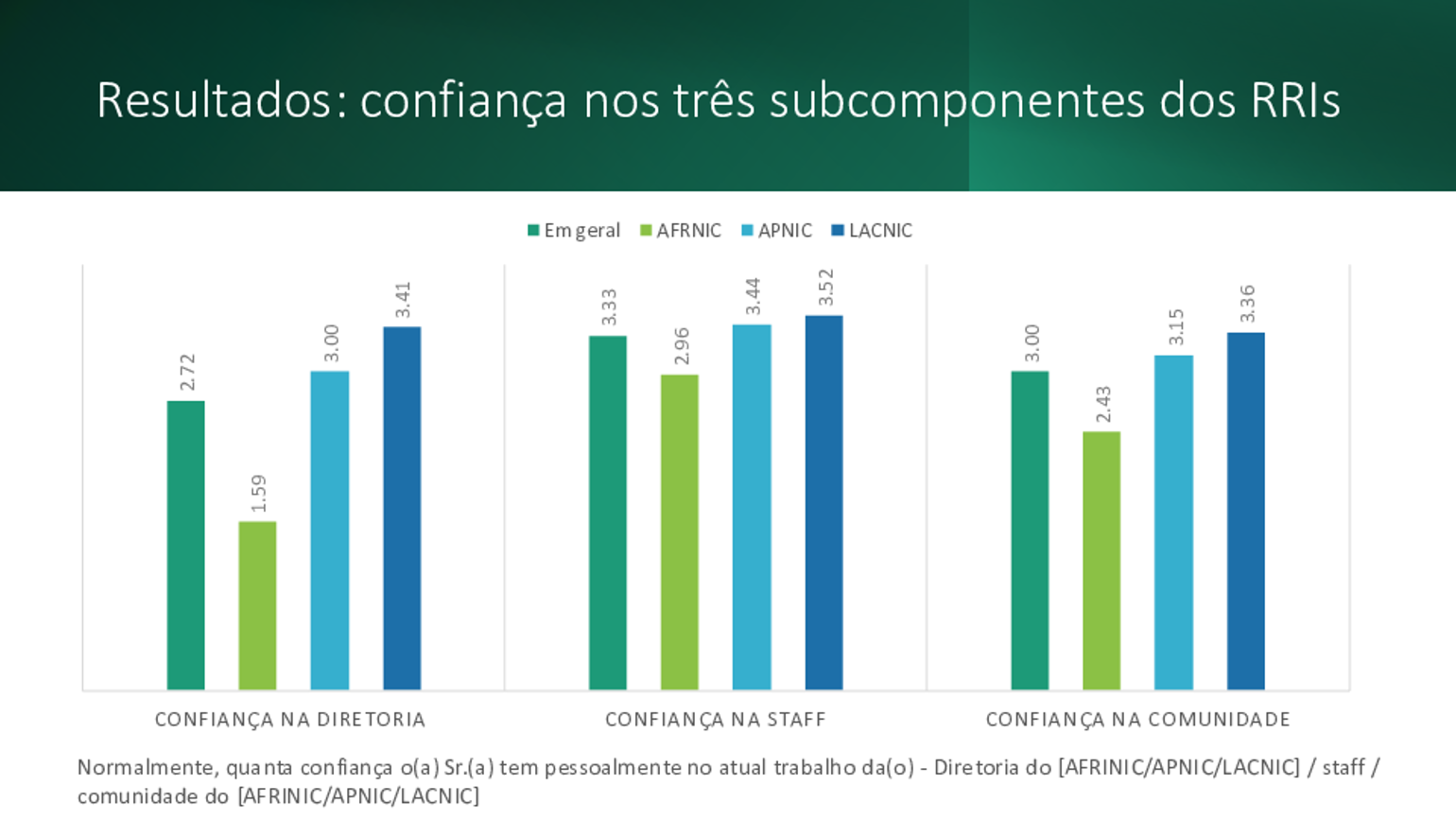
In the case of LACNIC, levels of trust across the three subcomponents are consistently high or very high. In the case of APNIC, and even more so in the case of AFRINIC, greater degree of variability is observed. While the AFRINIC community maintains a high level of trust in its staff (which scored nearly 3 on a scale from 0 to 4), trust in the community itself is slightly lower (between medium and high) and significantly lower for the board (between low and medium). The latter result is not surprising, as the AFRINIC board was not functioning for most of the period during which this study took place.
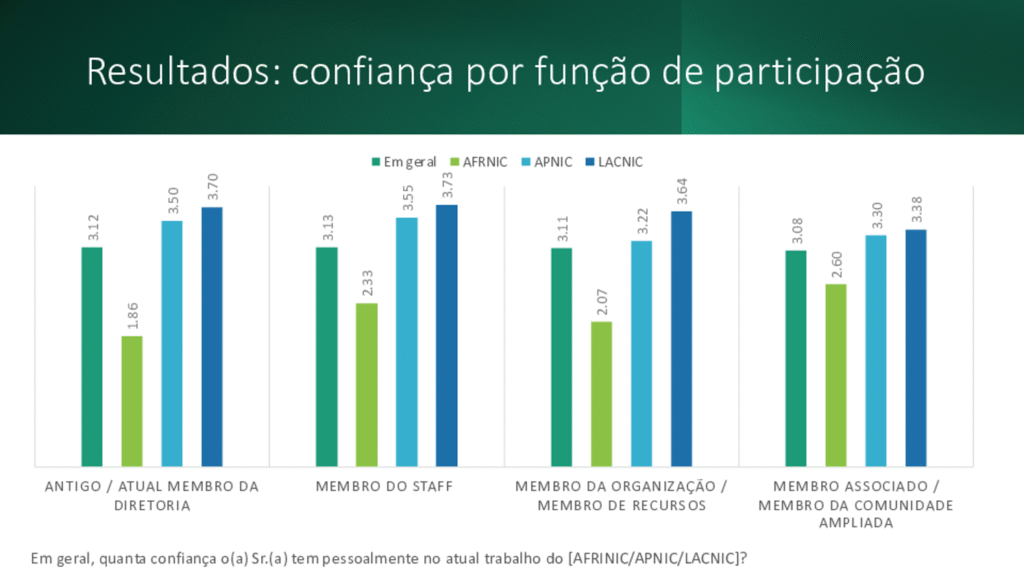
We observed that all groups report similar levels of trust in LACNIC, although this trust is slightly higher among staff and former board members. Trust among the general community is slightly lower (but remains high). In APNIC, the trend is similar to LACNIC. However, in AFRINIC, the trend is reversed. Here, members of the community in general report greater trust in AFRINIC than other groups, particularly former board members, for whom the reported trust index is the lowest.
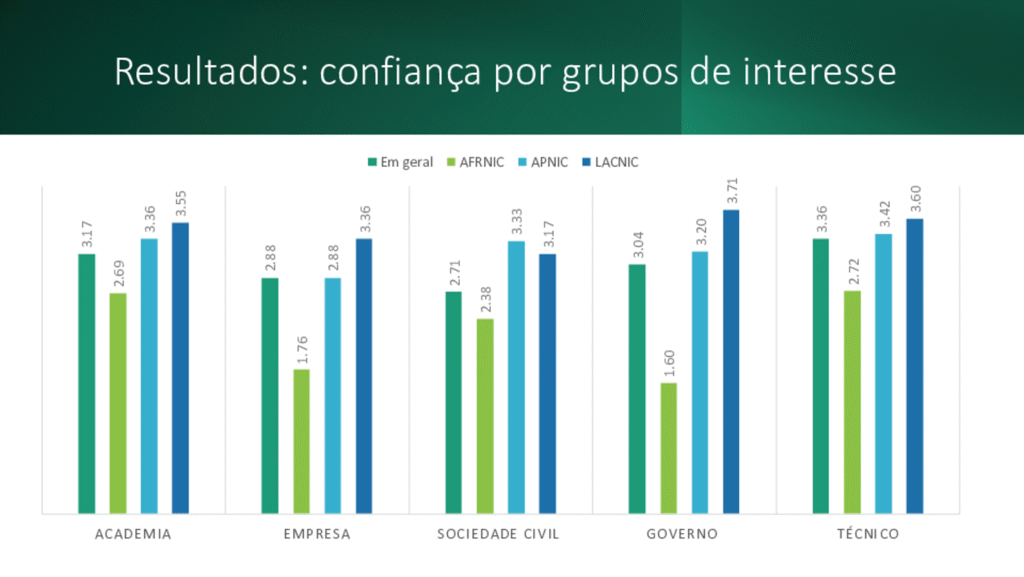
In the case of LACNIC, respondents representing government organizations reported the greatest level of trust in this institution. However, it should be noted that only a few individuals from this stakeholder group were interviewed, so this result should be interpreted with caution. They are followed by members of the technical and academic communities. On average, respondents representing (organized) civil society expressed lower levels of trust in LACNIC, with a score of 3.17 on a scale from 0 to 4.
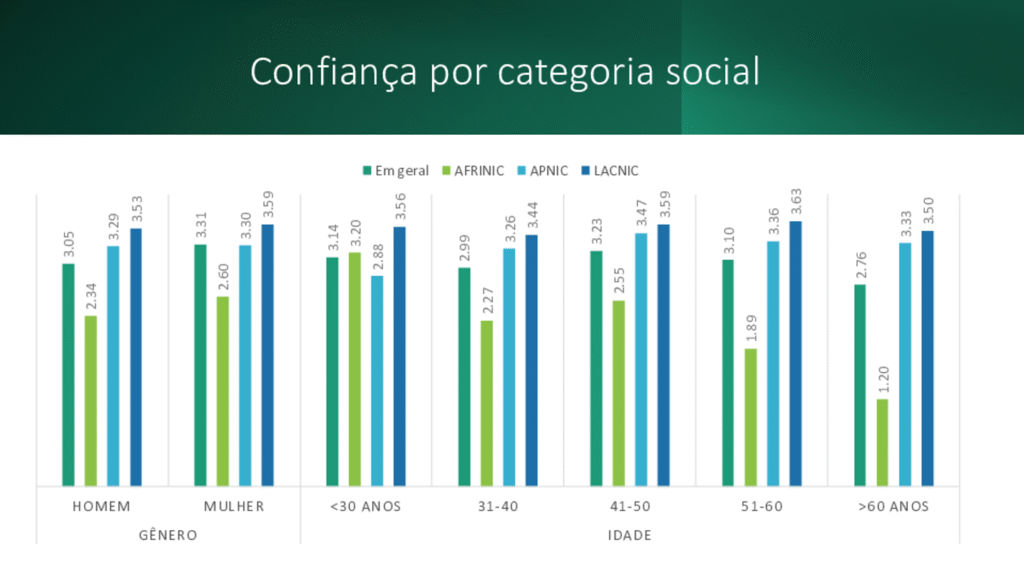
In LACNIC, we observed little variability across the various social groups. Men and women reported virtually identical levels of trust in LACNIC, and we also observed little variation across different age groups.
Our next goal is to identify the factors that explain the variation in how the legitimacy of the RIRs in the Global South is perceived. Understanding these factors is essential to strengthening regional and global Internet governance, ensuring the sustainability and effectiveness of these institutions that manage the so-called “critical resources” in the “network of networks”.