In June 2026, LACNIC launched a call to action for organizations in our region that hold or use legacy IPv4 resources, with the aim of establishing a formal relationship with them.
Legacy resources are IP blocks and ASNs assigned by InterNIC/IANA before 28 December 1997 that were never included in a membership agreement with LACNIC.
One of the main challenges is that many of the organizations targeted by this call do not maintain regular contact with LACNIC, and some may not even know they are affected. This is why support from the Internet community is essential to extend the reach of this initiative.
(Free access, no subscription required)
What should an organization holding legacy resources do?
Organizations that hold legacy IPv4 resources should contact LACNIC at contacto-registro@lacnic.net to begin the process of justifying their right to use these resources. Our Registration Services team will guide them through the next steps, request the relevant documentation, and review each case.
The deadline to initiate this contact is 16 December 2026.
If an organization does not contact LACNIC before the deadline or cannot justify its right to use the IPv4 resources, LACNIC may stop providing registration services to it.
If you have questions about whether your organization is affected, visit the Managing Legacy Resources page or write to contacto-registro@lacnic.net.
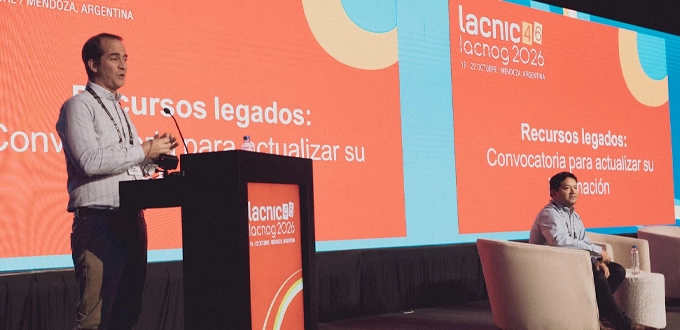
Presentation of the initiative during LACNIC 46 LACNOG 2026
The Relationship Between Resource Holders and LACNIC
After justifying their right to use legacy IPv4 resources, an organization must choose one of the following three types of relationship with LACNIC:
1. Resource information in LACNIC WHOIS/RDAP
This option allows the organization to keep its contact information up to date through MiLACNIC, which is then reflected in LACNIC’s public databases (WHOIS/RDAP).
This option is free of charge, and the IPv4 addresses retain their status as legacy resources.
2. Resource information in the LACNIC WHOIS/RDAP + Resource management services
In addition to keeping contact information up to date, this option provides access to the resource management services available through MiLACNIC, including rDNS, RPKI, sub-assignments, IRR, and geofeeds.
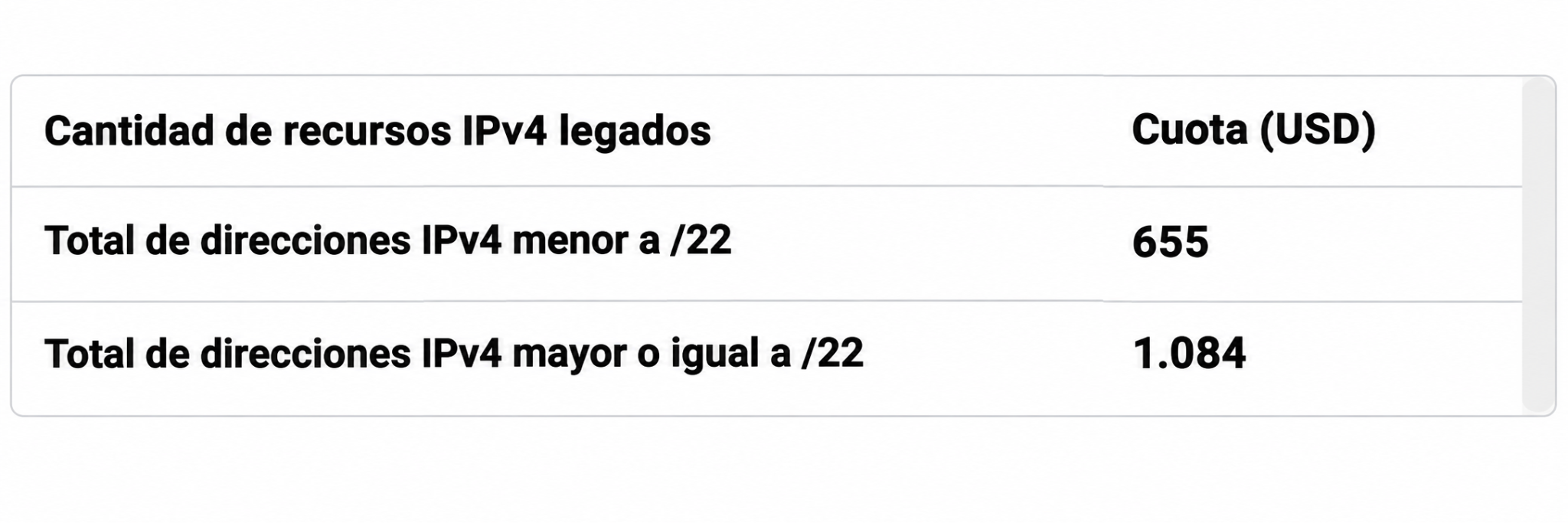
This option is subject to an annual fee, which varies depending on the total amount of legacy IPv4 resources held by the organization.
Billing will begin in 2027 and will be adjusted annually for inflation using the same index applied to LACNIC membership fees. The IPv4 addresses retain their status as legacy resources.
3. Become a LACNIC Member
The organization may join LACNIC as a member, with access to the rights and benefits, and subject to the obligations that come with membership.
This option is subject to the standard membership fees for LACNIC members.
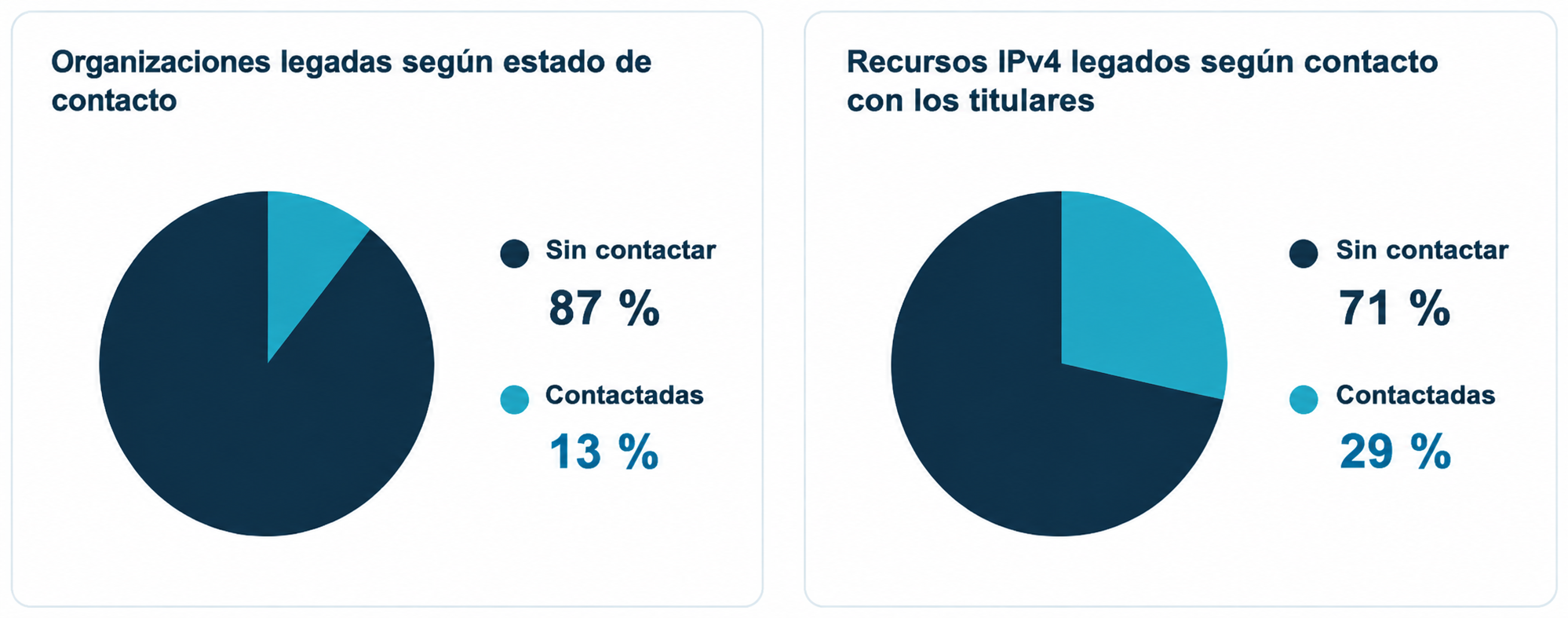
To date, the organizations that have contacted LACNIC and started the process of justifying their right to use the resources account for 29% of the total legacy IPv4 address space in the region and represent 13% of the total number of entities that hold legacy IPv4 resources.
While these results show progress, we still need to establish contact with a significant number of resource holders.
Community Support is Essential
To keep making progress, we need to widen the reach of this call and make sure the information reaches organizations that are not yet aware of the process.
The collaboration of the Internet community is key. If you are part of a network, an ISP, an IXP, a NOG, an academic network, or any other entity that is part of the region’s technical ecosystem, you can help us spread this information and bring it to the attention of organizations that may be affected.
Your support can help more organizations learn about the process, contact LACNIC, and formalize their relationship within the established timeframe.