Peering market at a glance
February 23, 2026

By Flavio Luciani, Namex CTO and John Souter, Namex Advisor
Trends, transformations, and regional dynamics of Internet interconnection
Abstract
Over the past decade, the Internet’s interconnection landscape has been shaped by sustained traffic growth, changing content distribution models, and increasingly complex relationships between networks. Internet Exchange Points sit at the center of these dynamics, yet their evolution is often interpreted through simplified metrics that do not fully reflect how the peering ecosystem is actually changing.
The peering market is not in decline, it is in transformation. Global Internet traffic continues
(Free access, no subscription required)
to grow relentlessly, yet traditional metrics such as IXP membership counts and headline capacity figures are no longer sufficient to explain the forces reshaping interconnection.
This paper presents an experience-driven analysis of how Internet Exchange Points are evolving worldwide, examining long-term trends across Europe, Latin America, Africa, Asia-Pacific, and North America.
Using data from peeringDB and the ISOC pulse IXP tracker, interpreted through decades of
to grow relentlessly, yet traditional metrics such as IXP membership counts and headline capacity figures are no longer sufficient to explain the forces reshaping interconnection.
This paper presents an experience-driven analysis of how Internet Exchange Points are evolving worldwide, examining long-term trends across Europe, Latin America, Africa, Asia-Pacific, and North America.
Using data from peeringDB and the ISOC pulse IXP tracker, interpreted through decades of
hands-on involvement in the design and operation of peering ecosystems, the paper shows that the slowdowns observed at large, mature IXPs are neither anomalous nor cause for concern. Instead, they reflect a structural shift: traffic is becoming more concentrated, interconnection strategies more selective, and alternative models, such as private network interconnects (PNIs), in-network caching, and edge-oriented architectures, are increasingly complementary to public peering rather than substitutes for it.
The analysis identifies the factors that truly determine IXP success and sustainability: telecommunications market liberalization, local content demand, population scale, data center ecosystems, and national infrastructure policy. Growth in emerging markets remains strong, while major historical hubs are evolving into complex interconnection platforms serving a far broader range of participants than traditional ISPs and content networks.
Far from being obsolete, IXPs are becoming strategic assets for digital resilience, data sovereignty, and national connectivity. Their future value will not be measured solely in terabits per second, but in their ability to keep traffic local, support critical services, absorb extreme traffic surges, and enable ultra-low-latency applications at the edge.
In an increasingly unstable geopolitical and technological environment, this paper argues that peering, and the IXPs that enable it, remains a
cornerstone of a robust, decentralized, and resilient Internet.
Introduction
We sometimes find ourselves writing articles about IXPs, often sharing our experience and what we have learned after working in this ecosystem for more than twenty years. At the same time, we also frequently find ourselves listening to others, who do not work directly in IXPs, expressing their views on what IXPs should be today and where they are heading.
In general, we have observed a number of presentations over time in which similar arguments are put forward. These suggest that over the past twelve months IXPs have not shown significant growth, and that much of the increase in traffic and interconnection is now happening outside of IXPs, with a growing share of traffic no longer flowing through traditional exchange points. It is also often argued that, for some networks, peering is becoming more expensive than transit, challenging a long-standing assumption.
In addition, these presentations highlight a rapid migration toward 100-GE ports as 100G
replaces 10G, together with a strong increase in the use of private network interconnections instead of public peering at IXPs. Finally, they claim that many “traditional” peerings are no longer being established and that, in some cases, major networks are even leaving IXPs in favor of alternatives such as transit or private interconnection.
The purpose of this contribution is therefore to share some reflections on the peering market and how it has evolved over the years, with a particular focus on the most recent period.
The questions we asked ourselves essentially revolve around some main points: how traffic has evolved over the years, what is happening today, and what future trends in peering growth might look like.
We have already had the chance to discuss this topic in some previous articles (see https://labs.ripe.net/author/flavio_luciani_1/), but we would now like to analyze the international situation in a bit more detail focusing not only on Europe but also on the rest of the world.
There are several sources from which data can be drawn. We will use the graphical analyses provided by the ISOC Pulse IXP Tracker (see https://pulse.internetsociety.org/en/ixp-tracker/), as they are well-structured, easy to consult, and based on the PeeringDB dataset (in terms of capacity and membership).
It is important to note that PeeringDB, valuable though it is, consists of user-generated data. In particular, it relies on key staff within network operators maintaining the data after they have been initially accepted into the database. As a consequence, there can sometimes be a lag in how up-to-date the data is, as compared to automatic measurements of things like traffic data, which can be collected from source via APIs or screen scraping. Ratios of PeeringDB data with traffic data – especially when there are significant changes in the ratio, should therefore be treated with caution.
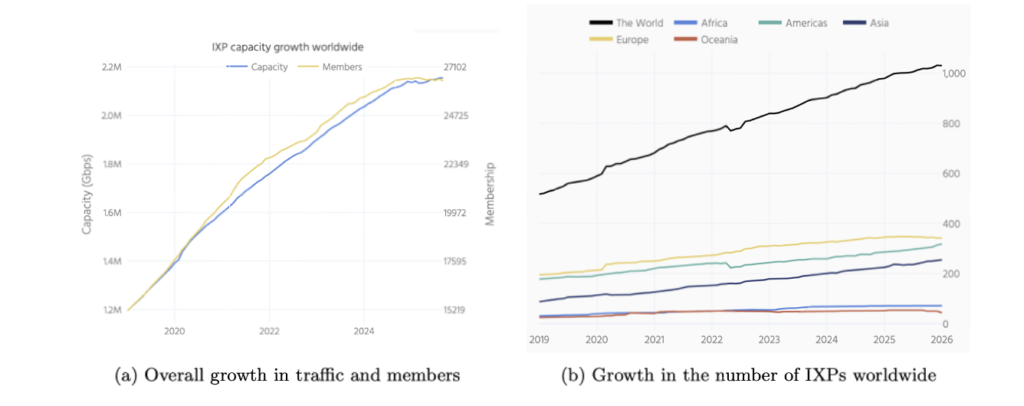
To begin with, we would like to take a global view, and at first glance it seems clear that the
capacity allocated at IXPs has grown over the years and at a remarkable pace. At the same time, we also observe growth in the number of networks that have joined IXPs over the years taking into account more than a thousand IXPs worldwide registered at PeeringDB. Although there is a slight decline in the number of ASes present at IXPs recently, in the last year the capacity continues to grow at a slower pace, but it is still increasing.
Looking at public peering data brings into focus the whole issue of peering strategy by access and content networks. In general, their policies will be determined by two things: their size and the nature of their traffic.
Larger networks will tend to prioritise more sophisticated forms of interconnection, such as in-net caching and private interconnects (PNIs), and this will be especially true of the very largest content networks. For some types of traffic, in-net caching is either impractical/inappropriate or undesirable, so that leaves us with PNIs as the higher priority mechanism, before or alongside consideration of public peering. Many networks using PNIs will have threshold values that need to be met, before the economics of PNIs really work, but this could have the side effect of siphoning traffic away from public peering, if that has already been established.
Namex and LINX are somewhat unusual in the IXP world in that they facilitate PNIs for their
members. This is driven by the fact that they are member organisations, and are therefore primarily focused on what their members want – driven by an understanding of peering strategy and hierarchy of needs. Both organisations know (via private information derived directly from their members) that the total traffic passing over PNIs is much, much greater than their public peering fabrics.
None of this diminishes the importance of public peering. Public peering is used by a far wider spectrum of networks than PNIs, so its reach and utility is in no way undermined by the fact that other peering mechanisms exist.
2 Methodology: country selection criteria
To conduct a meaningful and representative analysis of the global peering landscape, you could examine every country individually. However, a more effective approach is to focus on a subset of countries that meet the following criteria:
- Presence of IXPs: the country must host one or more Internet Exchange Points.
- Robustness of IXPs: the IXPs present should be at least of medium size and stability, ensuring that they play a significant role in local interconnection.
- Established peering market: there should be a sufficiently developed peering ecosystem, with active participation from networks and content providers.
- Continental representation: the selected countries should collectively represent all continents to provide a global perspective.
- Availability of reliable data: only countries where PeeringDB and ISOC Pulse data are complete and up to date are included.
- Traffic significance: priority is given to countries whose IXPs account for a substantial share of regional traffic (e.g. among the top IXPs in terms of peak throughput).
- Growth dynamics: where possible, the selection includes both mature and emerging markets in order to illustrate not just the current state but also the evolution of peering worldwide.
- Population of the region: one of the clear criteria for the establishment and success of IXPs
is to be serving, via connected access provider networks, significant numbers of domestic and business users (often dubbed ’eyeballs’ for short). Without this, there is nowhere for content traffic to flow to! The scale of eyeballs represented at an IXP will therefore have an impact on the measurements shown in this report, and the more established IXPs (with millions of connected eyeballs) will almost certainly be less prone to exaggerated peaks and troughs.
Based on these selection criteria, we will now identify a number of countries and IXPs for each continent, let’s take a closer look at them.
3 Analysis of world regions
3.1 Latin America & Caribbean
For the South American region, this analysis mainly focuses on Argentina, Chile and Brazil. Starting with Argentina, both the capacity and the number of networks connected to IXPs appear to follow the same trend observed globally, as shown in the previous section.
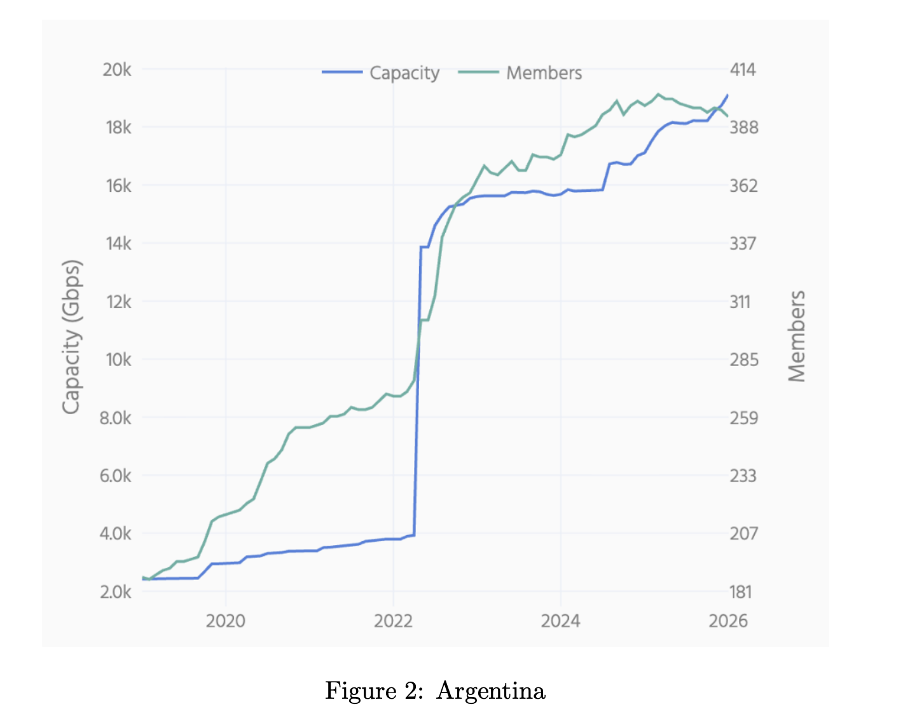
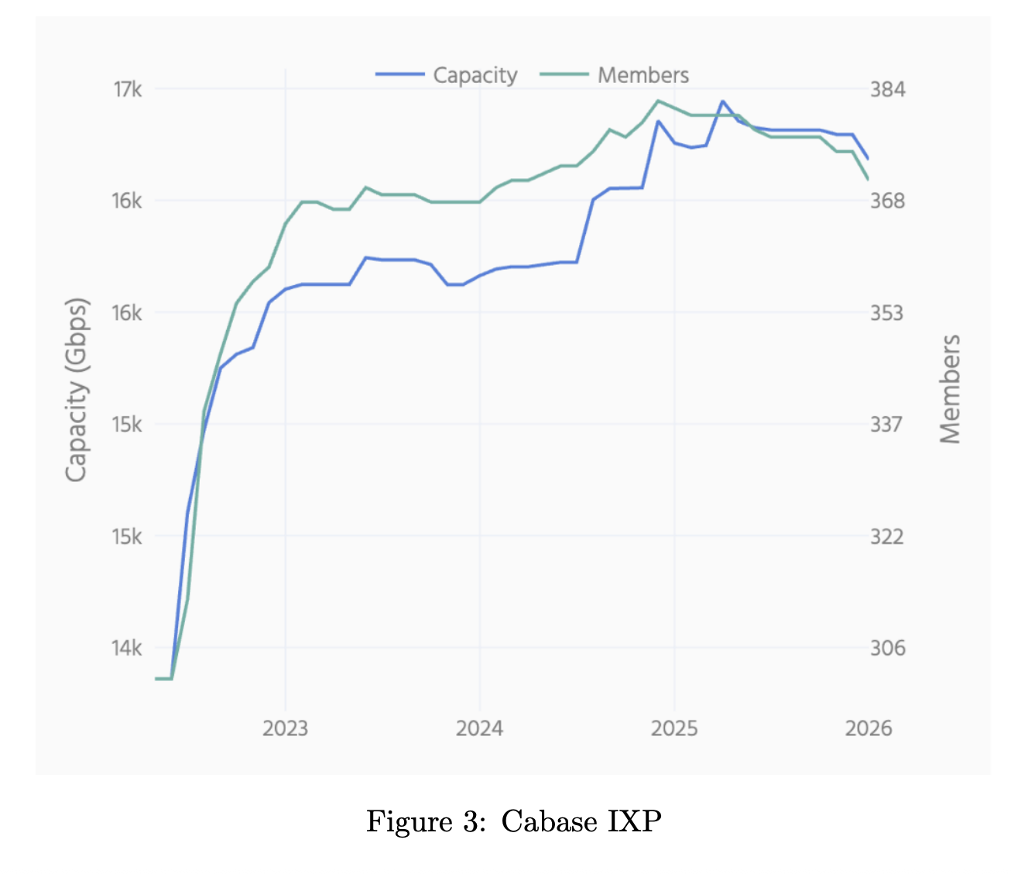
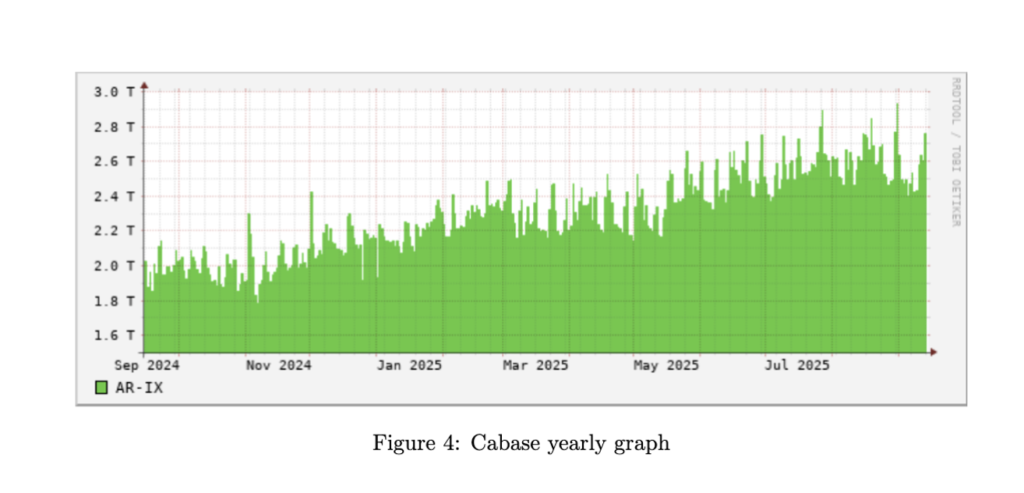
A slight decrease in the number of ASes can be observed, but the capacity shows a clear upward trend. According to Pulse, there are four IXPs operating in the country, with CABASE Argentina handling the majority of the traffic. It counts more than 500 active members and currently reports a peak traffic volume well above 4Tbps. Although periods of growth and decline alternate over time, the overall picture clearly shows a positive trend.
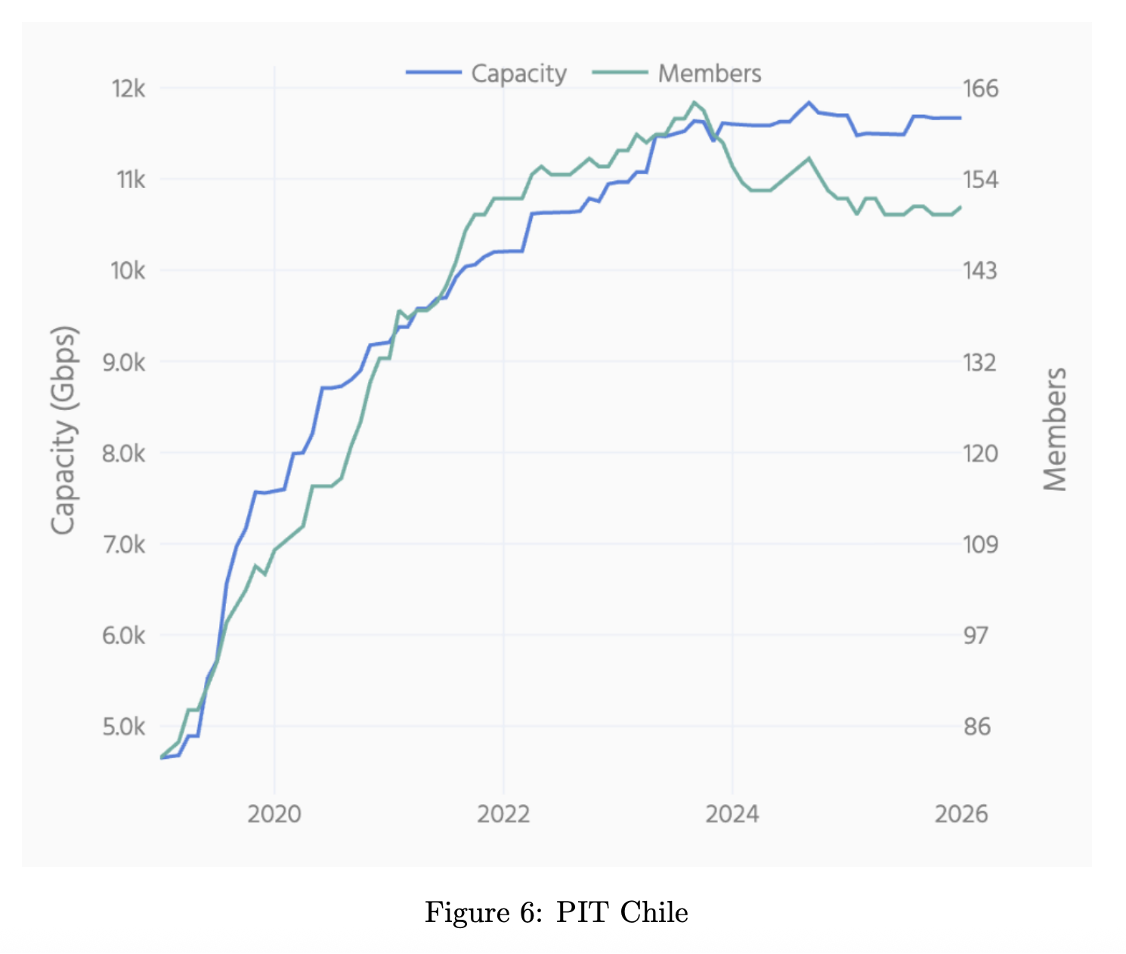
In Chile, there has been a noticeable dip in the past year. The capacity is now recovering, whereas the number of networks connected to IXPs has remained relatively stable, suggesting a resilient core of participants despite short-term fluctuations.
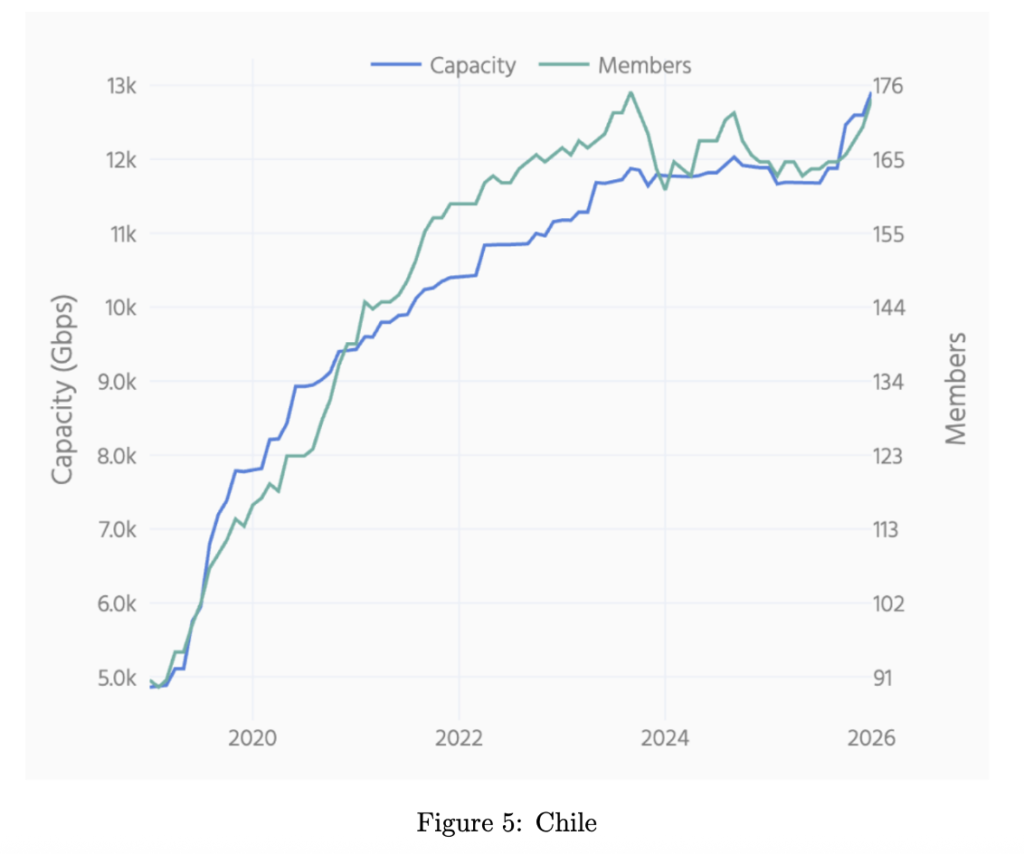
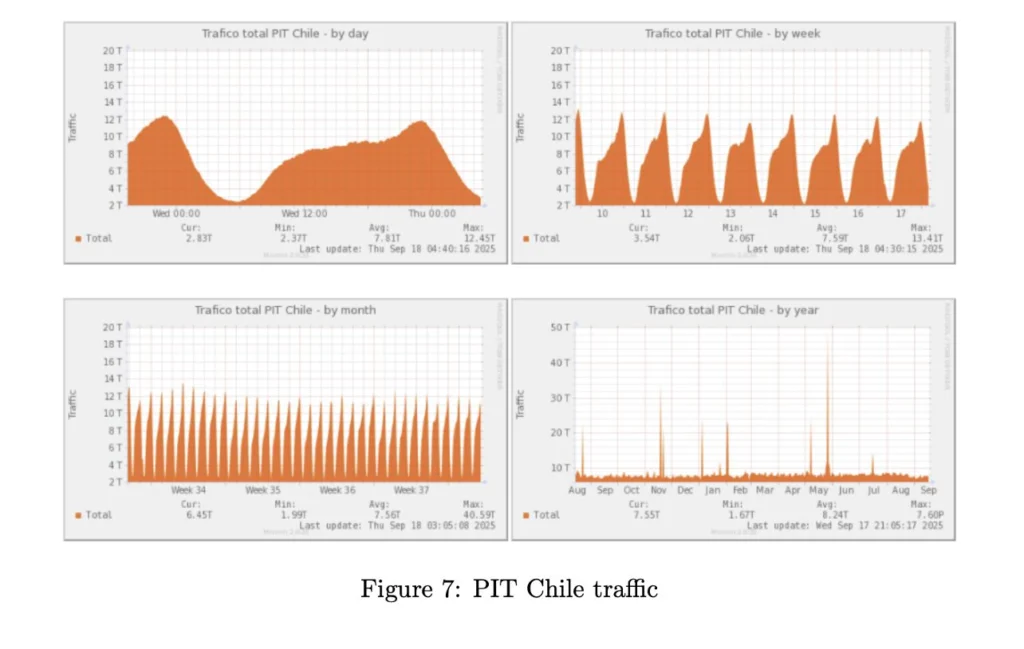
This observation is further supported by the chart for PIT Chile Santiago (more than 12Tbps of exchanged traffic), presented below. Chile has a population of around 20 million people, so these are quite high traffic numbers as a ratio to population. As a benchmark, it is several times that of corresponding exchanges in Italy and the UK. The transient peaks in the annual graph below are probably the result of measurement/reporting errors, as indicated by their absence from the in-graph summaries. A curiosity for further examination?
Now let’s look at Brazil, which has the largest IXP in the world, IX.br. Let’s first take a look at the country’s data:
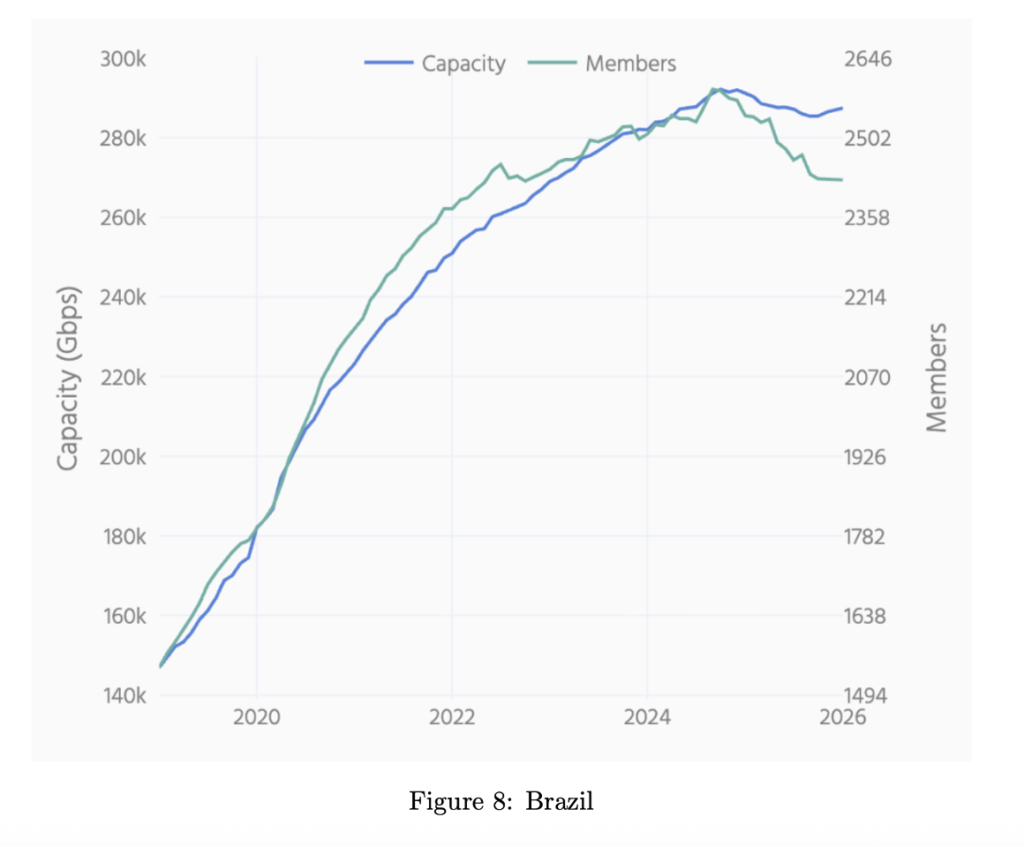
In Brazil, there seems to be a much more pronounced dip compared to Argentina and Chile, both in terms of capacity and peers. These figures are supported even when we look only at IX.br in Sao Paulo, which has over 1,700 members and peering traffic peaks exceeding 40 Tbps!
We contacted IX.br to find out why there was an apparent decline in the number of members, and they responded as follows: ”We’ve been cleaning up our user base, removing inactive users who were hogging number resources. On the other hand, we’ve seen new users joining, consuming more bandwidth, replacing departing ASNs. However, the net result is a decrease in the number of ASNs and an increase in bandwidth consumption.”
The following graph shows their internal ASN count and capacity/member count:
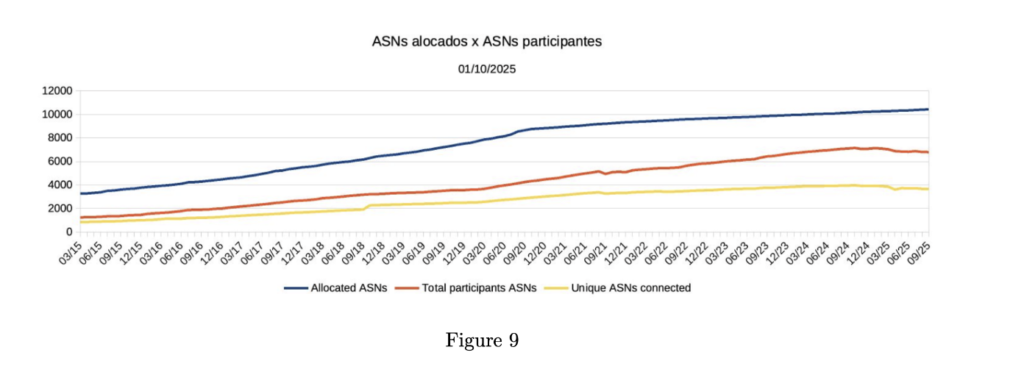
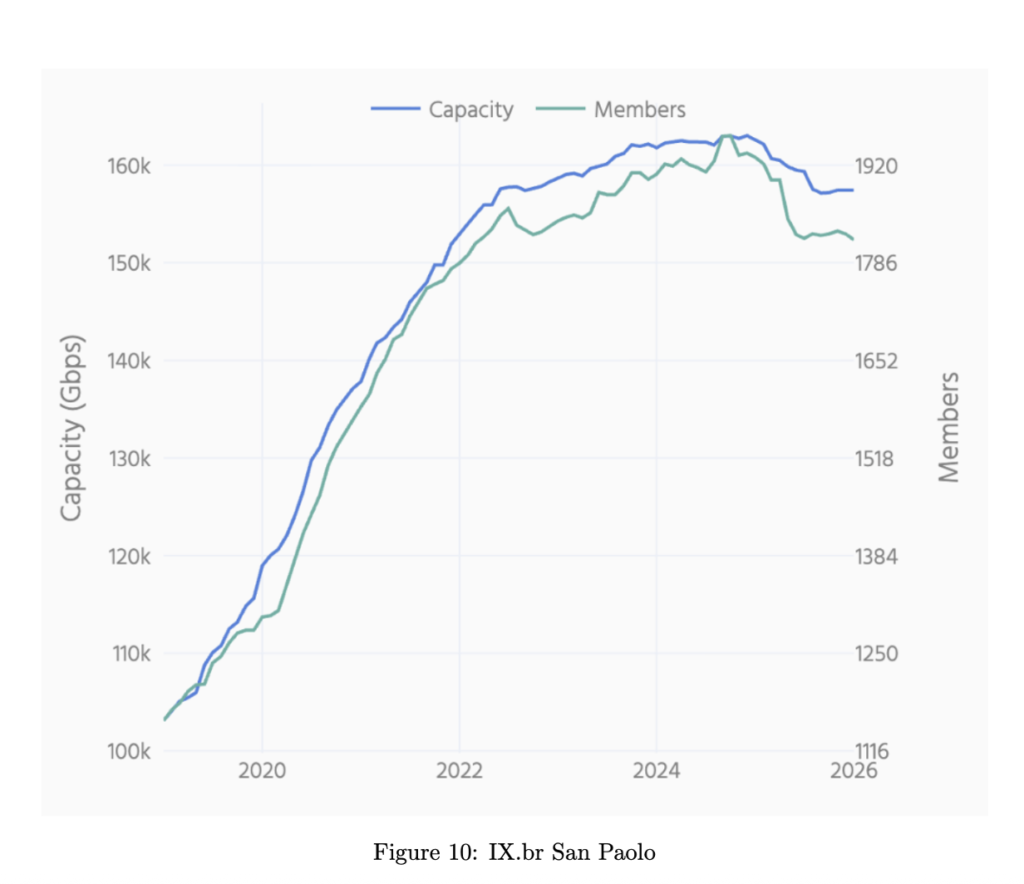
As we can see from the following traffic chart for the past year, there is no clear growth trend. However, when we look at the broader picture, from 2019 to today (decadely), it clearly shows the significant growth that peering has experienced and continues to experience over the years.
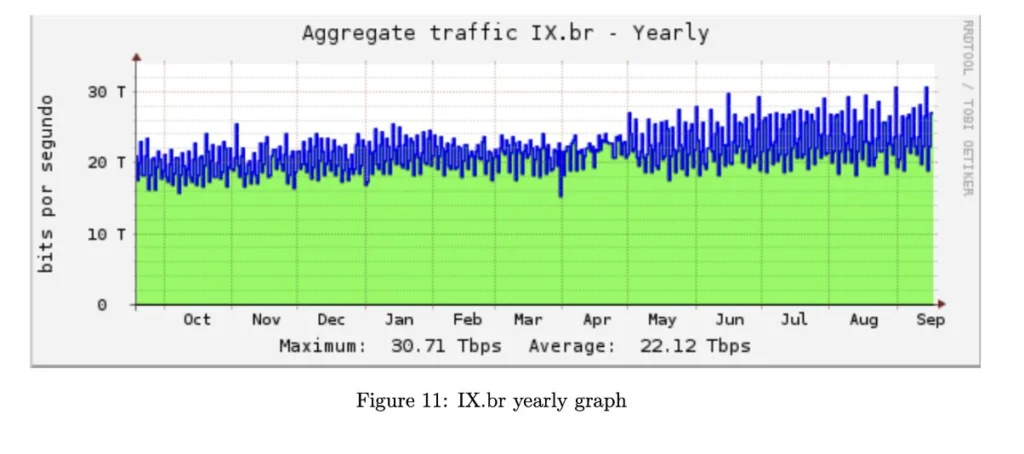
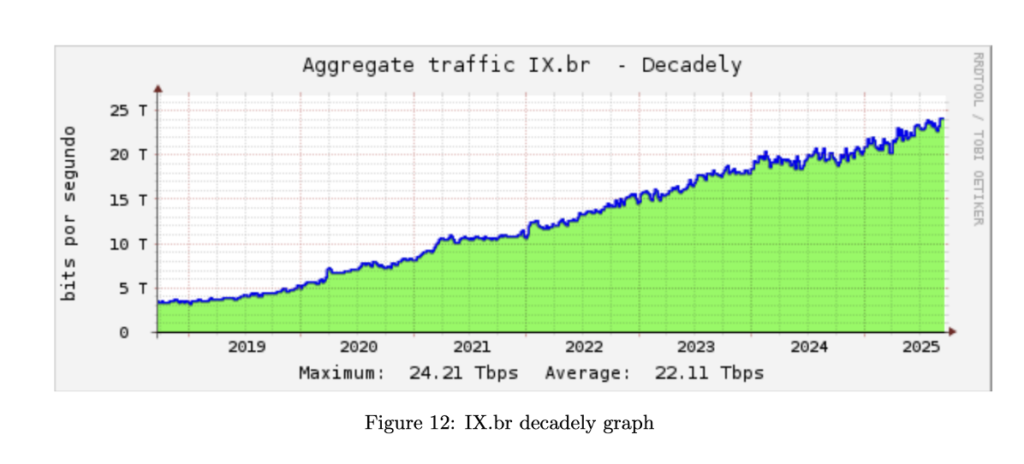
IX.br is a stand-out phenomenon in the IXP world. Not only is it the largest IXP in terms of connected ASNs (over 2,800), the amount of peak traffic (around 45Tbps aggregated across all of their exchanges) but also the number of exchanges operated across Brazil – currently 39.
There are other IXPs in Brazil (for example, operated by Equinix in their data centres), but it is fair to say this massive IXP dominates Brazil, and also dwarfs the other exchange operators in South America.
How do we explain this phenomenon?
Well, firstly it is the nature of Brazil itself: the seventh largest by population (well over 210 million), the sixth largest by physical size (bringing all sorts of challenges to building IXPs) but also by the fact that Brazil is a Portuguese-speaking country – and uniquely so in South America.
The last aspect means that much of the Internet traffic will stay in Brazil, rather being routed to and from neighbouring countries, and the huge size of the population, and their relatively high Internet literacy (in global terms) means that there will be a lot of it! Add to that the complexity already mentioned of building IXPs in a physically large country of quite diverse geographic and physical features – then building IX.br has been a tremendous achievement.
Secondly, IX.br has benefitted hugely by being fostered and hosted by the Brazilian Internet Registry (NIC.BR). This has provided significant economic and organisational benefits, and we think it is fair to say that it would have been virtually impossible to achieve what has been done without this support. Quoting directly from the IX.br website:
- One of the main advantages of this model is the rationalization of costs, since the traffic balances are resolved directly and locally and not through third-party networks, often physically distant.
- Another major advantage is the greater control that a network can have regarding the delivery of their traffic as close as possible to their destination, which usually results in better performance and quality to their customers and more efficient operation of the Internet as a whole.
- IX.br is thus an interconnection in metropolitan area network interconnection points (pixes), commercial and academic under centralized management.
Other IXPs in Latin America
Looking at some of the smaller IXPs in the region, the growth is clearly tangible. In ecosystems where there is a need for local traffic exchange and the IXP is still young, there is considerable room for growth both in the number of ASes present and in the volume of capacity. For example Mexico with 7 IXPs, Bolivia with 2 IXPs, Colombia with 7 IXPs and Perú with 10: here, the growth is visible and there is no dip in the graphs.
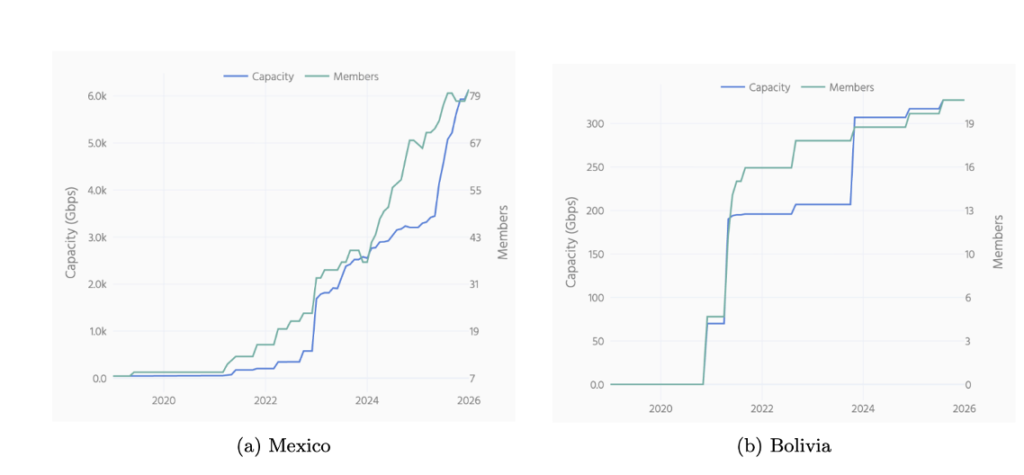
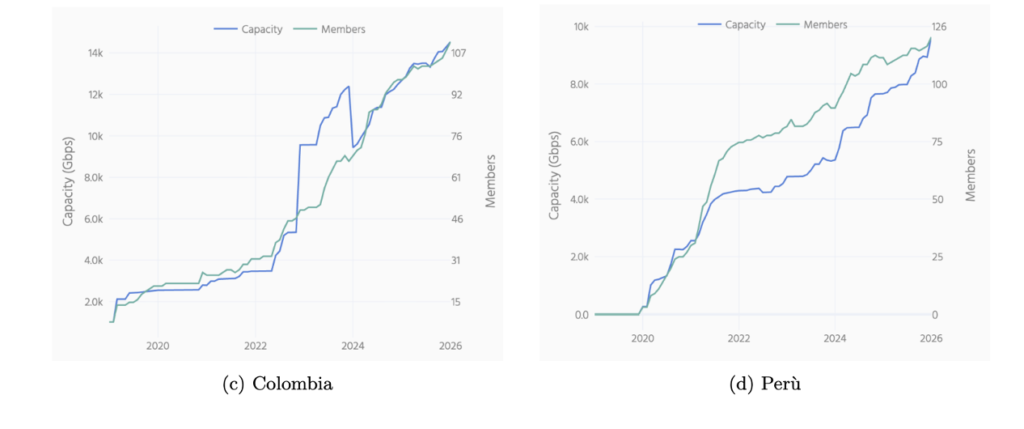
We talked with LAC-IX, the South American association of Internet Exchange Points, to gather insights on potential emerging countries. They explained that Mexico is a very large market that was, for a long time, heavily regulated and dominated by the Telmex monopoly. In recent years, however, the landscape has been changing, with the rollout of new metropolitan and national fiber-optic networks, the construction of data centers, particularly in Queretaro and the emergence of new IXPs.
The views expressed by the authors of this blog are their own and do not necessarily reflect the views of LACNIC.