In preparation for our upcoming annual event, LACNIC 44 LACNOG 2025, to be held in El Salvador, we examined the current landscape of the Internet in our host country considering several sources of information consolidated under Internet Measurements by Country.*
This report presents key indicators on the state of the Internet in El Salvador, including BGP announcements, RIPE Atlas platform coverage, MANRS implementation, as well as IPv6 and RPKI adoption. This data provides a comprehensive view of Internet performance in the country and seeks to support decisions aimed at strengthening Internet infrastructure and resilience.
BGP Announcements
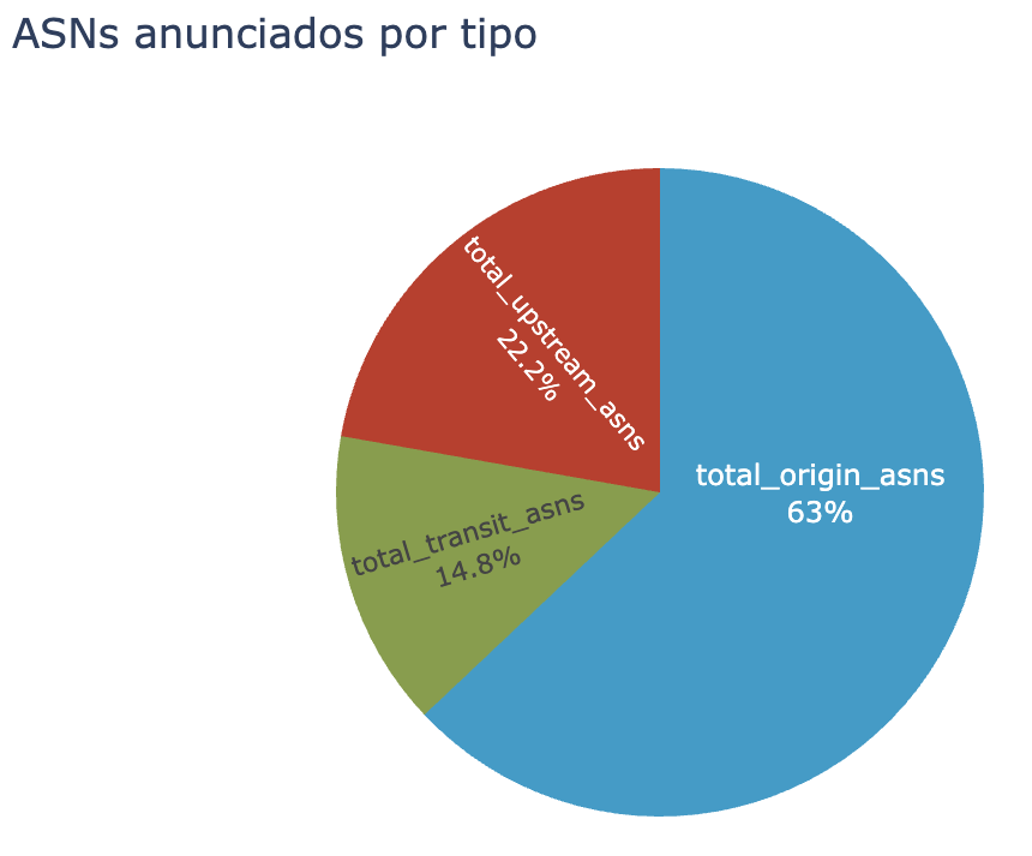
The image on the left shows the percentage of announced ASNs by type. In BGP, announced ASNs can be classified into three types:
(Free access, no subscription required)
Origin ASNs: ASNs that announce the prefixes (blue)
Transit ASNs: ASNs that connect to the origin ASN within a country (green)
Upstream ASNs: ASNs that provide connectivity to another country (red)
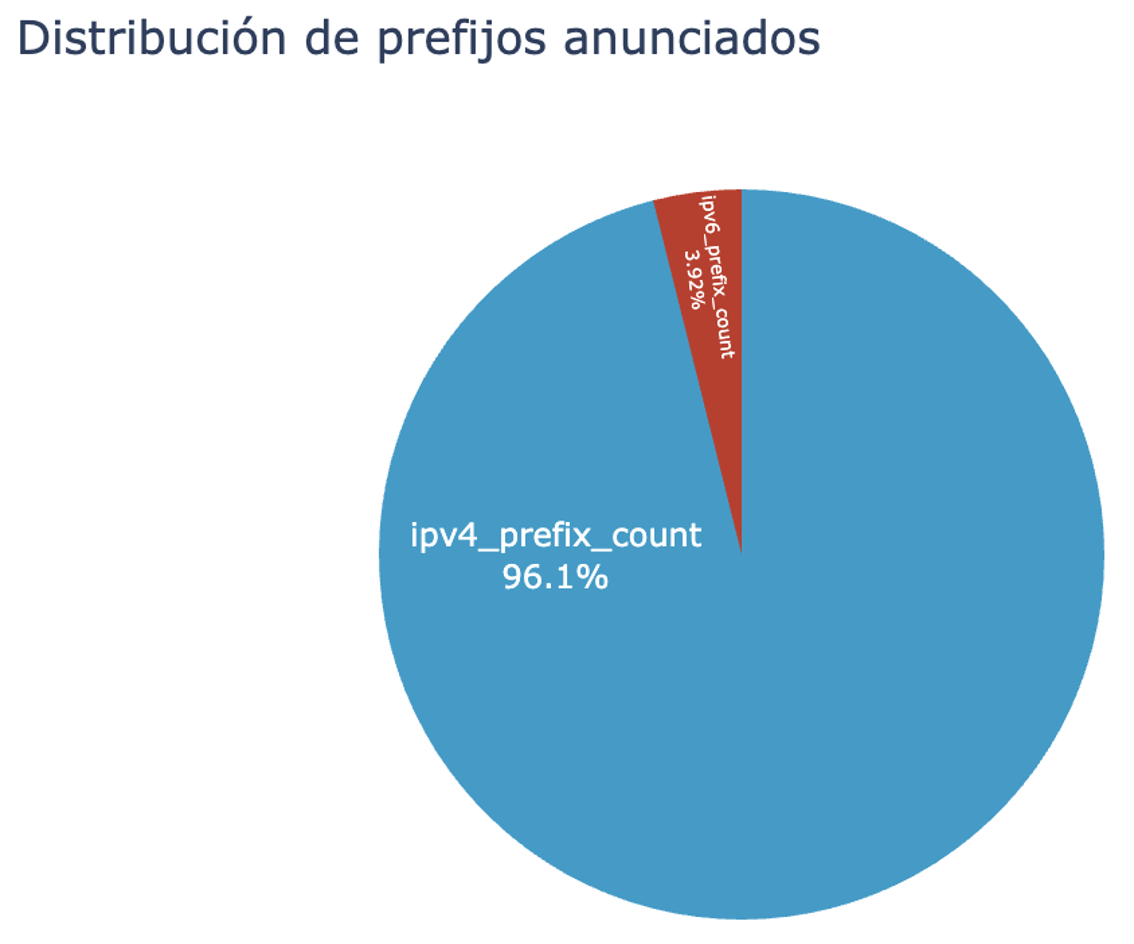
The chart on the right shows the percentage of announced IPv4 prefixes (blue) and announced IPv6 prefixes (red).
Another interesting number is the average AS PATH length, which in the case of El Salvador is 5.08. Average AS PATH length for El Salvador’s neighboring countries is as follows:
Costa Rica: 4.74
Mexico: 4.78
Guatemala: 5.22
Honduras: 5.6
RIPE Atlas
RIPE Atlas is an open, free Internet measurement platform. It has extensive capacity for measuring latencies, traceroutes, DNS, HTTP, NTP, and more. It relies on community participation to host probes and thus achieve sufficient coverage to collect complete and impartial data.
Origin ASNs: ASNs that announce the prefixes (blue)
Transit ASNs: ASNs that connect to the origin ASN within a country (green)
Upstream ASNs: ASNs that provide connectivity to another country (red)
The chart on the right shows the percentage of announced IPv4 prefixes (blue) and announced IPv6 prefixes (red).
Another interesting number is the average AS PATH length, which in the case of El Salvador is 5.08. Average AS PATH length for El Salvador’s neighboring countries is as follows:
Costa Rica: 4.74
Mexico: 4.78
Guatemala: 5.22
Honduras: 5.6
RIPE Atlas
RIPE Atlas is an open, free Internet measurement platform. It has extensive capacity for measuring latencies, traceroutes, DNS, HTTP, NTP, and more. It relies on community participation to host probes and thus achieve sufficient coverage to collect complete and impartial data.
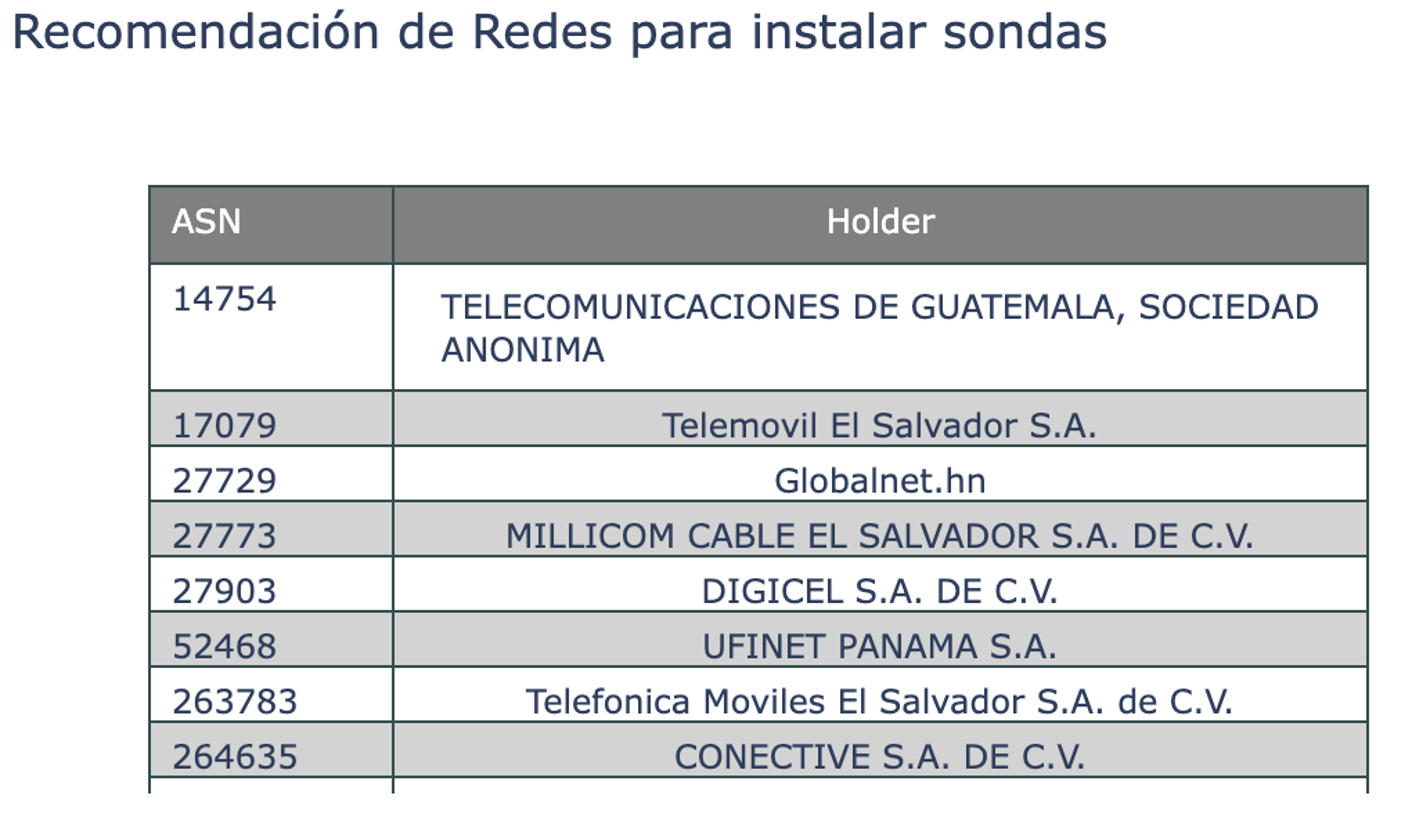
Only four probes are connected in El Salvador. This number is not only insufficient to provide meaningful and representative data for the country; it also prevents its inclusion in interconnection studies. To improve coverage, we have compiled the following table with recommendations of networks where additional probes are needed.
If your network is on the list, please don’t hesitate to contact us to discuss the matter and receive support for installing the probe.
MANRS
Mutually Agreed Standards for Routing Security (MANRS) is an initiative aimed at enhancing the security and resilience of the global Internet routing system. It promotes the adoption of well-established industry best practices and technological solutions by those running BGP to address the most common threats.
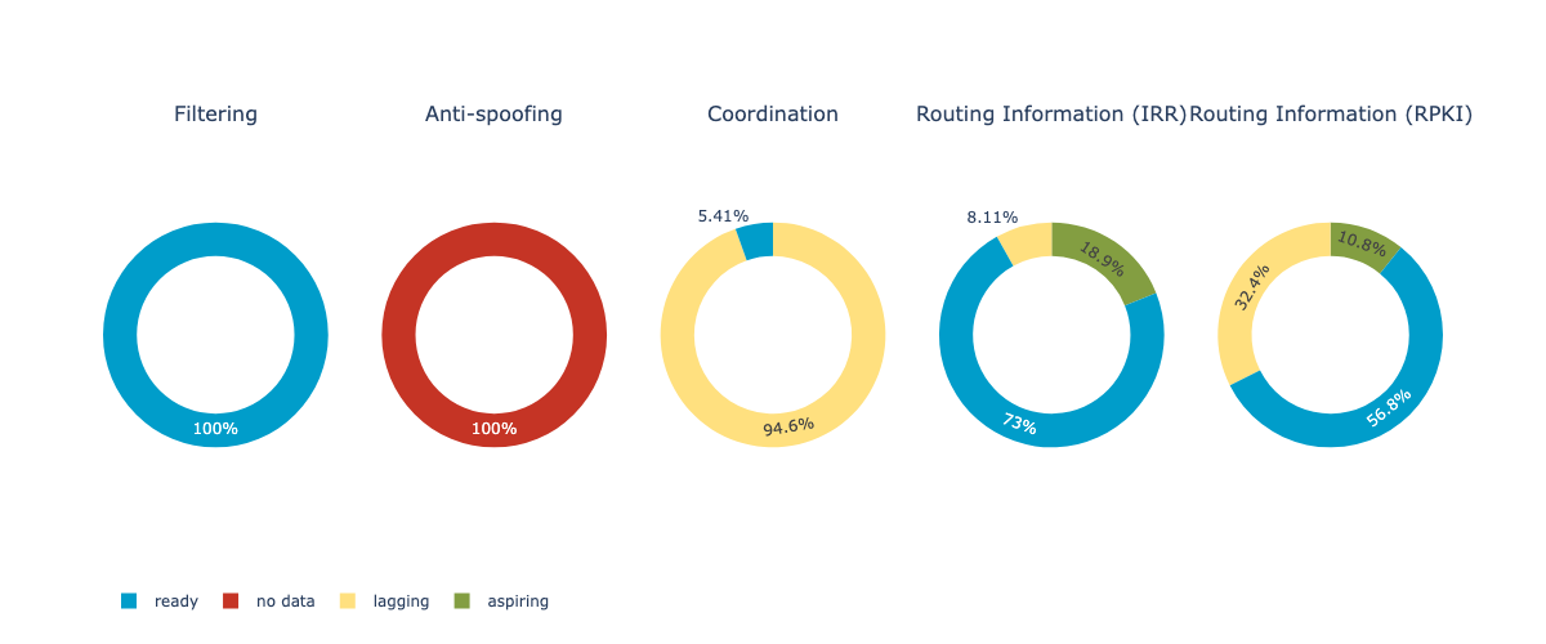
The table below shows the level of readiness for each metric in El Salvador:
As shown in the image above, El Salvador has 100% filtering, which significantly contributes to the security and resilience of the network.
In the case of RPKI (56.8%) and routes registered in an IRR (73%), there is still a long way to go, as these numbers are lower than those of Guatemala (60% and 81.7%) and Costa Rica (67.5% and 83.8%).
Additionally, coordination still requires significant improvement, as it is also below that of their neighbors Guatemala and Honduras (43% and 31.8%, respectively).
IPv6 Adoption
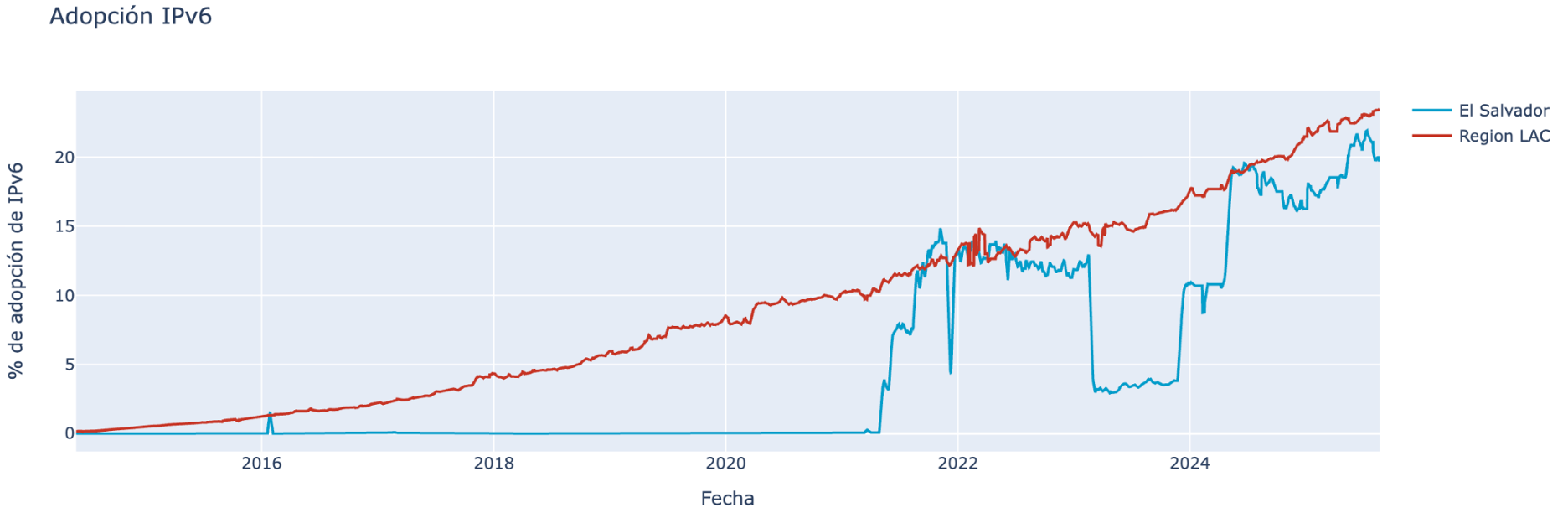
Today, El Salvador has an IPv6 adoption rate of almost 20%. As shown in the image below, this number is lower than the regional average.
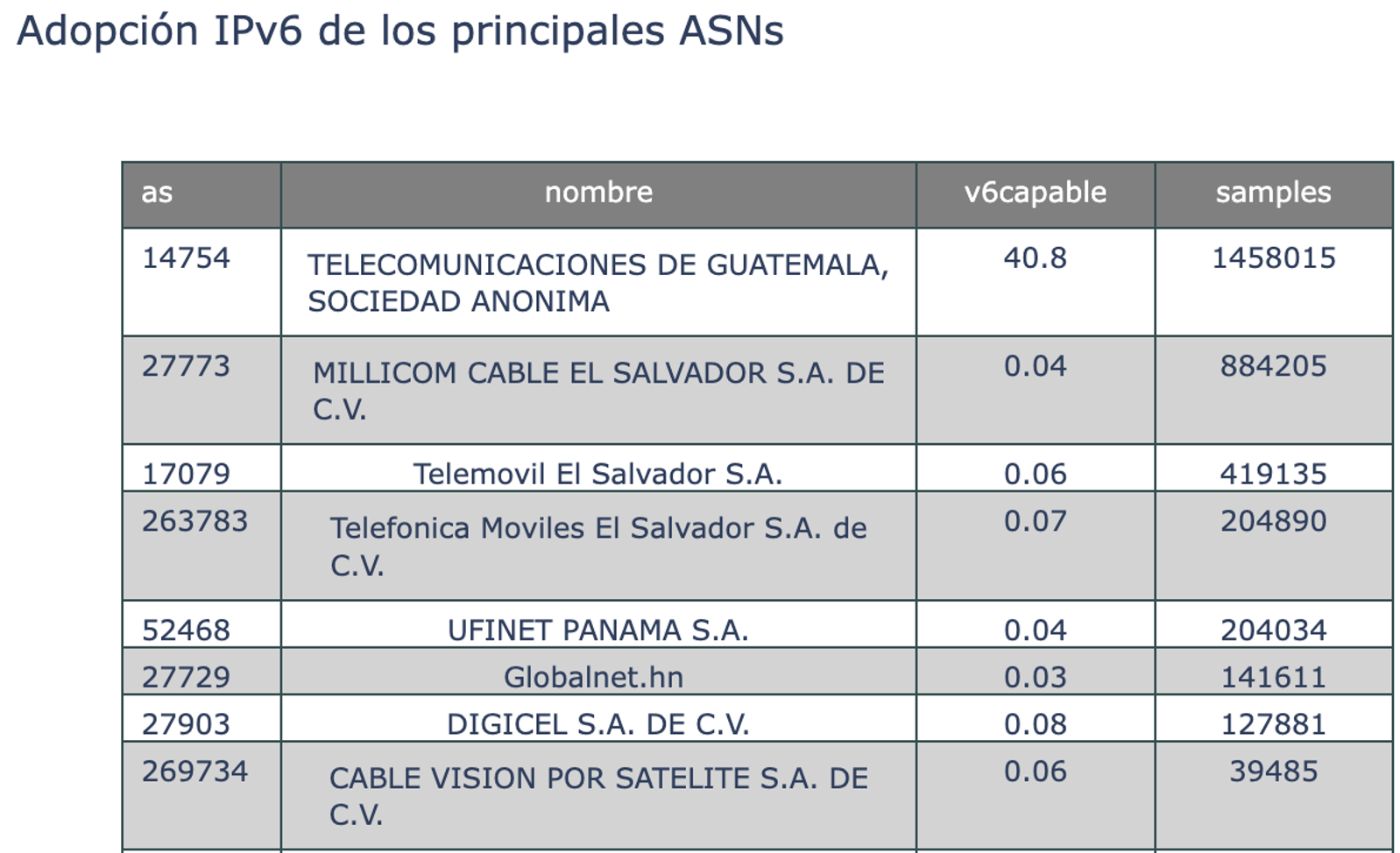
We have also listed the main ASNs in El Salvador and their respective adoption rates:
RPKI
By using RPKI, operators in the region can check whether an autonomous system is authorized to announce a specific range of prefixes. This makes it possible to validate that BGP announcements are not being made by unauthorized autonomous systems and that Internet traffic is not being diverted along the way.
Because RPKI deployment is not yet universal, validation results can vary. Prefixes identified as “valid” are protected by RPKI and can be considered trustworthy. Those identified as “not found” are not yet protected by RPKI. “Invalid” is used for incorrect or malicious announcements.
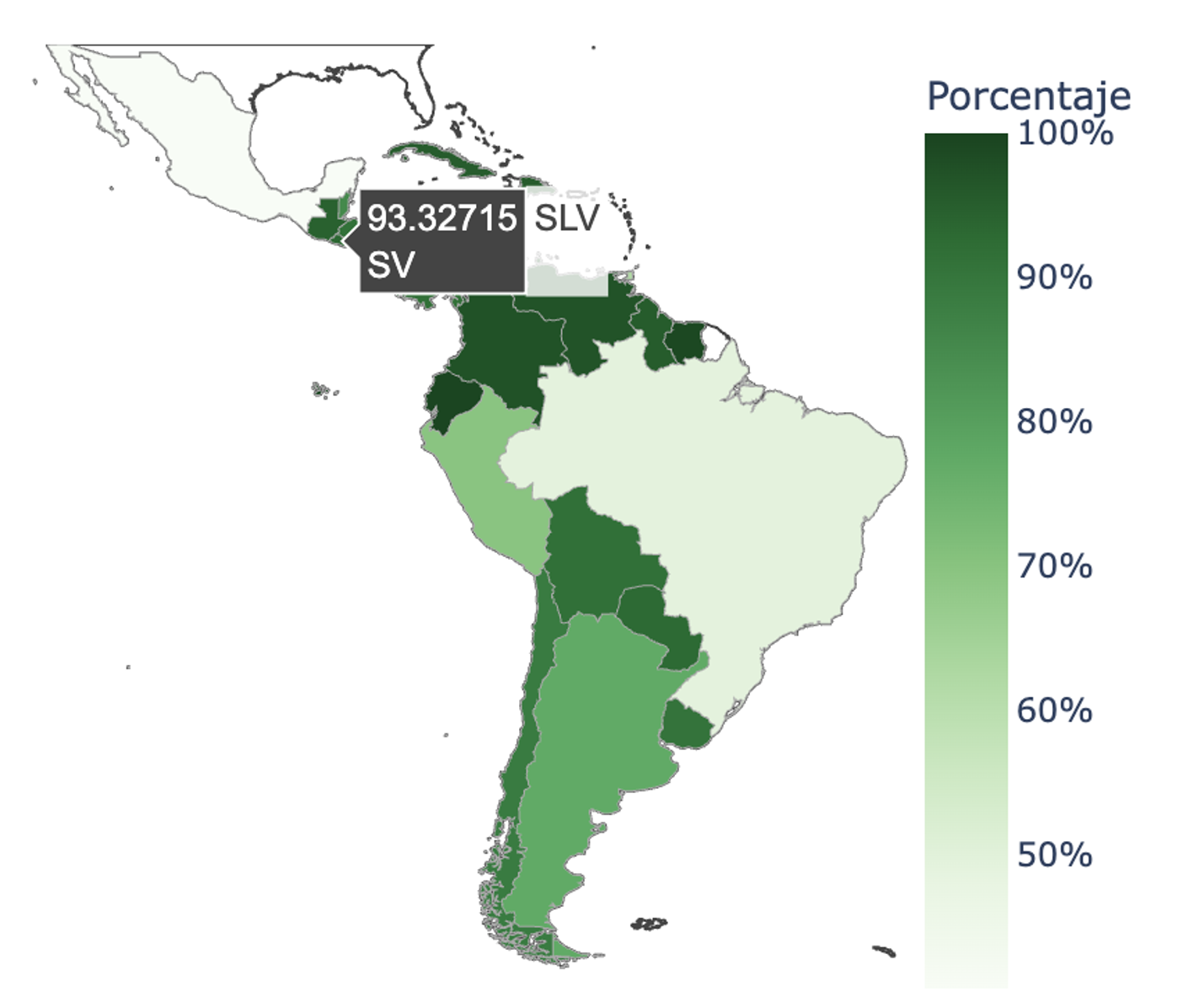
In the case of El Salvador, the percentage of prefixes covered by RPKI ROAs is 93.4%.
This chart was taken from the FORT Monitor Project and shows the percentage of valid and invalid IPv4 Prefix/Origin AS pairs covered by RPKI ROAs by country. As RPKI deployment grows, the number of unprotected (not found) prefixes will decrease and the accuracy with which invalid prefixes are identified will increase.
Conclusion
This review of various aspects of the Internet in El Salvador shows the efforts that are on the right track and the areas that still require attention.
Expanding the coverage of RIPE Atlas measurement probes is particularly important. Increasing the number of probes will allow us to gather more representative and impartial data to continue measuring connectivity in El Salvador and identify opportunities for further improvement.
Additionally, there will be a dedicated session for the Salvadoran Internet community to discuss these topics in greater depth. Titled The Internet in El Salvador, Present and Future, this session will take place on the afternoon of Wednesday, 8 October for the purpose of discussing Internet operation in the country, the challenges it faces, and potential solutions based on the adoption of best practices and standards. Remote participation will not be available for this session. If you will only be attending this session, click here to register (free of charge). We look forward to seeing you there!
The views expressed by the authors of this blog are their own and do not necessarily reflect the views of LACNIC.